
Agathocles' expedition to Africa
Agathocles' expedition to Africa (310 BC–307 BC) was an invasion of the territories of Carthage in North Africa by the tyrant Agathocles of Syracuse. Agathocles' march, which began near Cape Bon, initially headed east and then west. While facing east, Agathocles sent ambassadors to Cyrenaica, involving both the governor of the Greek region, Ophelas, and the satrap of Egypt, Ptolemy I Soter, who would become a close ally. Agathocles' war in Africa also involved the city of Athens and a large part of Greece, which, receiving an invitation from Ophella to participate in the Syracusan war campaign, sent its soldiers and colonists to Cyrene with the intention of forming, after having defeated Carthage, a Hellenistic kingdom in the western part of Africa.
Agathocles clashed with Ophellas, killed him, and took command of all the troops. He conquered numerous cities and won over almost all of his Libyan allies who abandoned Carthage, leaving it dangerously vulnerable but the arrival of alarming news from home distracted Agathocles from the conflict; he was forced to leave to quell the serious unrest that had broken out in Sicily. The army remaining in Africa was entrusted to his son Archagathus.
When he finally returned to Libya, Agathocles found the situation completely reversed the Carthaginians, during his absence, had attacked the Syracusans with deadly ambushes, decimating them. Agathocles tried one last time to confront the Carthaginian soldiers head-on, but his numerical inferiority and the rugged terrain worked against him. The Syracusan, who in Africa held the title of basileus, abandoned the expedition in 307 BC and returned to Sicily without men and with only one ship. It is a matter of debate whether or not Agathocles intended to quickly return to Africa. The remnants of his army, feeling betrayed, killed his sons, unleashing his terrible vengeance against the Syracusans who remained at home. At the end he had to surrender all his territories captured in Africa to Carthage reversing all the gains the had made in the campaign.
Background
Carthage besieges Syracuse
Hamilcar noticed the walls were now undefended when the inhabitants flocked to the port and exploited this mistake. He sent his strongest troops to the walls with scaling ladders and climbed the walls without being noticed. When they were about to occupy the walls, they were spotted and attacked by Greek guards on patrol. The guards were quickly joined by other defenders, who arrived before the Carthaginian reinforcements. The Greeks got the upper hand and killed some of the attackers, who retreated. Hamilcar withdrew his army from the walls. Because he had not been able to take Syracuse that day, he decided to send 5000 soldiers to the aid of Carthage in response to the request of the messengers.
The Carthaginians advanced towards the walls at night to avoid being seen, with Hamilcar at the front. He was followed by the Syracusan exile Deinocrates, who commanded the cavalry. The infantry was divided in two groups, one composed of Carthaginians and the other with the Greek allies of Carthage. They were followed by an unruly crowd of camp followers who wished to profit from the eventual plunder of Syracuse. Because the roads were rough and narrow, fights broke out between the camp followers and the baggage train over the right of way. This created significant confusion and disorder in the Carthaginian ranks. It was at this point that Agathocles of Syracuse, besieged in his own homeland and with all of Sicily against him, decided to take the previously unheard-of step besiege Carthage directly at home, in Africa.
Prelude
The departure for Africa
The overcoming of the Carthaginian blockade
thumb|upright=1.5|Reconstruction of Carthaginian triremes.
Agathocles of Syracuse had his men armed, but had not told them where they were headed. When the 60 ships were ready, some soldiers believed they were headed on an expedition against Italy, others believed they were about to head against the Punic province of Sicily.
Polyaenus tells that when they were already on the ships, Agathocles wanted to understand how many of his men were really willing to make the crossing with him, so he told them that they were headed towards Africa, against Carthage, and added:
Agathocles, taking advantage of the distraction of his adversaries, moved his ships; at full speed the Syracusan sailors prepared to break the blockade of the Carthaginians, sailing towards the open sea. The Carthaginians, seeing Agathocles' fleet sailing in close formation, thought that he wanted to fight to save the merchant ships, so they got into battle position, but when they realized that the Syracusan fleet's target was not the merchant ships it was already too late; Agathocles had gone out, so the Carthaginian ships began to pursue him. Meanwhile, the grain-laden ships were able to distribute food to the city of Syracuse undisturbed. Agathocles managed to avoid the enemy's ships, feeling himself far enough away only when night fell.
Battle of the Solar Eclipse
The exact day, month and year of the departure of Agathocles and his army for Africa are known thanks to an astronomical event reported in ancient sources, a solar eclipse, which occurred on 15 August 310 BC, and was observed by the Syracusan sailors the day after their departure, which therefore occurred on 14 August. This event had such a resonance that three sources have survived that mention it Diodorus Siculus, Marcus Junianus Justinus and Sextus Julius Frontinus, although the first two speak of a solar eclipse, while Frontinus instead claims that Agathocles observed a lunar eclipse.
Diodorus Siculus describes this event as :
Justin provides with a detailed version as follows:
Justin explains the reason for the despondency of Agathocles' army, the eclipse was seen in ancient times as a powerful sign of omen for wars, as in the case of the battle of Halys, which took place a few centuries before between the Medes and the Lydians and was nicknamed "the battle of the eclipse" precisely because its outcome was decided by a solar eclipse, as the soldiers, taken by surprise by the event, interpreted the phenomenon as a sign of the will of the gods for the battle to end instantly, and therefore they all stopped fighting.
Also interesting is the version of the event given by Frontinus the Roman historian states that the eclipse seen by the Syracusans was not solar but lunar, and he is also the only one to maintain that Agathocles gave his men a natural explanation of the phenomenon, without mentioning in any way the ancient symbolism that the eclipse carried with it:
Landing in Africa
Landing at Cape Bon and vow to Demeter and Kore
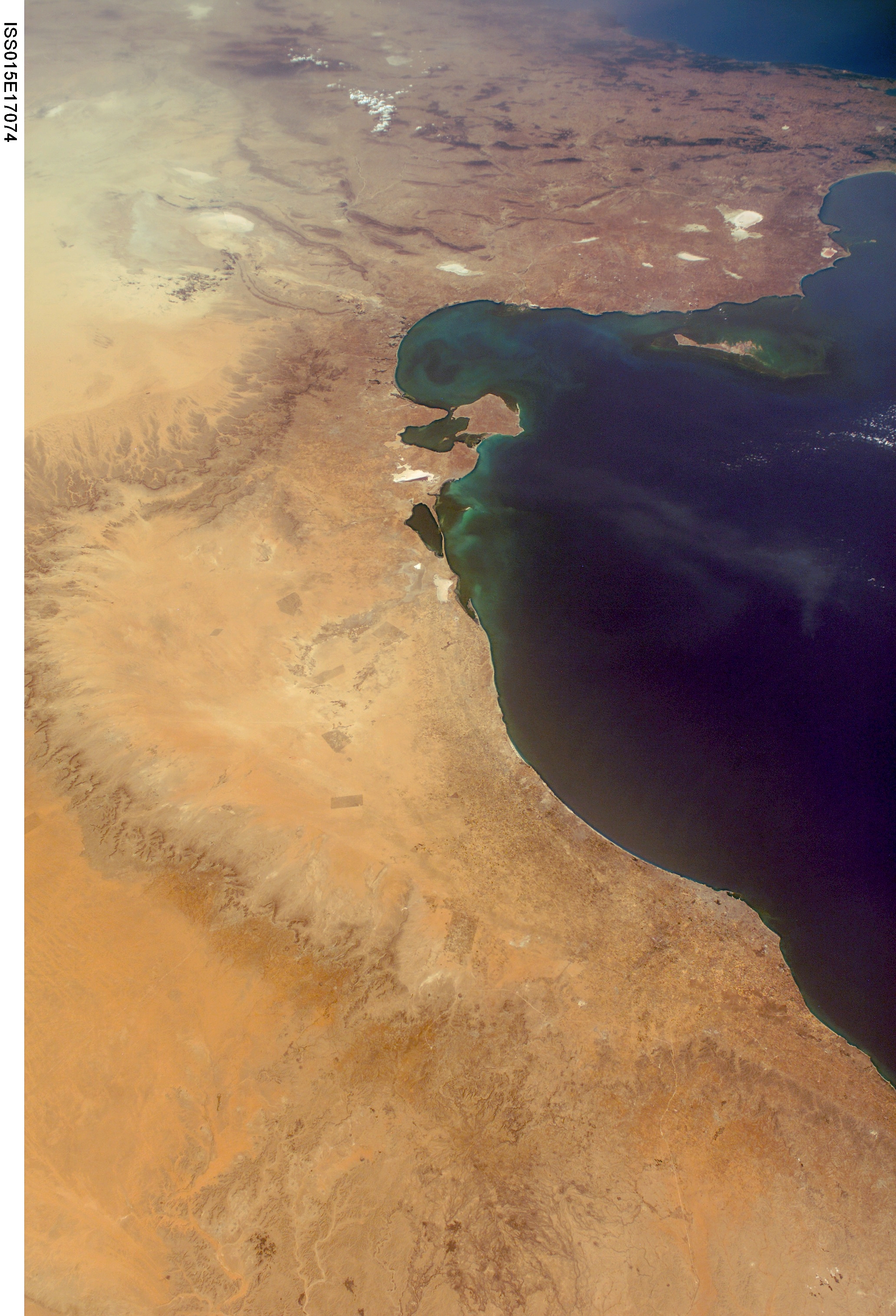
thumb|upright=0.8|Satellite image of Cape Bon, Tunisia, and the Libyan Desert.
After sailing for six days and six nights, at dawn on the seventh day Agathocles' fleet spotted the Carthaginian ships guarding the African coast. The two fleets began a sort of competitive race to see who would reach land first; the stakes were very high: the Carthaginians knew that Agathocles' fleet was the last hope of Syracuse, besieged by Hamilcar, and moreover if they had blocked it in time no war would have reached the gates of Carthage; the Syracusans of Agathocles, for their part, knew that if they were not the first to land what awaited them once they reached land would be death and slavery for their homeland.
thumb|upright=1.1|left|The quarries of El Haouaria, the probable landing site of Agathocles.
Amid the encouragement of both factions, Agathocles' men finally managed to land first. They landed at Cape Hermaeus (in ancient Greek: ‛Ερμαία ἄκρα, Latin Mercurii promontorium), today's Cape Bon, in an area called by Diororo Latomiae (from latomia). The Carthaginians, after having tried in vain to oppose Agathocles' army by sea, preferred to retreat and close the quarters to the invaders. Agathocles conquered the beach, had the ships pulled up on dry land and built a palisade. The latomie are large stone quarries, the landing site has therefore been identified with a place on the tip of Cape Bon which is rich in these quarries El-Haouaria; the large latomie located to the south-west of the Cape with which Carthage was built.
There are, however, further proposals for the place of Agathocles' landing more generally in the stretch between El Haouaria and Kélibia, or even a few kilometres north of the Cape in a place which will be known to the Romans with the name of Aquae Calidae, today's Korbous. Important for the purpose of identifying the place is the testimony of the geographer Strabo; he too has preserved the memory of Agathocles' landing and asserts that it took place near the Hermaeum, in a place rich in thermal springs and stone quarries (he therefore agrees with what is reported by Diodorus).
Even if one does not entirely agree with the identification of the specific location of the landing, it can be said that Agathocles and the Syracusan army landed north of the present-day Gulf of Tunis . The geographer of Amasya recalls following, towards the east, a city called Neapolis (today Nabeul) and continuing a mountain called Aspis (᾿Ασπίς: the Shield; because of its shape), whose land, Strabo states, will later be populated by Agathocles.
Agathocles orders the burning of the ships
thumb|upright=1.4|Votive busts bearing the likeness of Persephone, found in Syracuse, the main center for the dissemination of her religious cult.
Once the palisade was finished, Agathocles ordered sacrifices to be made in honour of the chthonic deities who protected Sicily. Demeter and Persephone. Once this was done, he proclaimed an assembly with the army to which he presented himself in the most elegant way: "encircled with a crown and dressed in a shining robe".
He confessed to his men that he had previously made a vow to Demeter and Persephone he promised the gods that if they allowed him to reach African soil safely, he would, as a pledge, set fire to the ships on which he and his men arrived. So, after having made an encouraging speech to the soldiers, in which he told them that they would win because victory had been foretold to him by the gods, he took a lighted torch in his hand and had an identical one distributed to all his officers. Then he went aboard the flagship, went to the stern and invited his officers to do the same. Then he set fire to the ship and his men did the same with the rest of the fleet. To the sound of trumpets and applause, the Syracusan soldiers saw the only vessel that could lead them home burning before their eyes. From that moment on, the only way to leave Africa was victory win to rebuild other ships, or die in that foreign land.
With this clever stratagem, Agathocles ensured that the soldiers would not give in to the temptation to turn back and flee from the battles that awaited them on African soil. The Syracusan was the first to experiment with such an extreme move, which was later to enter the annals of history; in fact, there are no precedents before Agathocles of ships being burned by one's own men: only in the Iliad do we come close to a similar gesture, when in one of the bloodiest battles, Hector sees the Greeks fleeing and therefore sets fire to their ships to prevent their escape; but in that case it was the Trojans, the enemies, who burned the ships of the adversary, while Agathocles' gesture is more contemptuous since it implies self-motivation: one imposes victory or total defeat on oneself. From his gesture was born the modern motto: "Burn the ships or put yourself in a situation of no return"
The March of Agathocles
The prosperity of the Carthaginian region and the first clashes
Since they had nothing left to protect, having set fire to their ships, there was no reason to leave men at the landing point, so Agathocles was able to set his entire army on the march.
Ancient historians have left detailed testimony on the prosperity of Carthaginian soil: thumb|upright=1.1|Olive groves at Cape Bon.
thumb|upright=1.1|Fertile fields near Nabeul.
Agathocles found himself crossing a very long stretch of fertile, lush land, filled with green gardens and orchards, with irrigated fields that reached far and wide, and with beautiful white-walled country houses dotted throughout the land. Olive trees and vineyards dominated the verdant landscape; pastures of oxen and flocks populated the plain, while thoroughbred horses were stationed in the marshes. Every comfort characterized the Carthaginian countryside estates. Everything the Syracusans saw undoubtedly attested to the wealth that the empire had brought to the Carthaginians; an empire that had reached the gates of Syracuse and threatened to enslave it. Diodorus reports that Agathocles, in order to distract his men from the thought that was still focused on the burning of the ships, immediately led them to a battle he conquered the city of Megalopolis (whose archaeological site has not yet been identified) and the army had a high morale, because the rich land promised a conspicuous reward.
It was easy for the Syracusans to make conquests, since the inhabitants of the surroundings of Carthage proved to be inexperienced in war. No one before Agathocles had dared to wage war against Carthage in its own country, so its population was caught off guard. After Megalopolis it was the turn of the conquest of White Tunis (of uncertain location) and Tunis (called Tynes by Diodorus); both inhabited centers were devastated and although Agathocles' men wanted to spare Tunis and establish their operations center inside it and make it the headquarters of their spoils, the Aretusean dynast opposed it, not wanting to offer easy hiding places in case of battle; therefore he preferred to establish his general headquarters in the open air; in the countryside of Tunis.
Carthage's reaction
thumb|upright=0.9|left|The ruins of Carthage, located in present-day Tunis, Tunisia.
The Carthaginian fleet, which had previously withdrawn, returned to the place where Agathocles and his men had landed, finding only the ruins of the ships burned by fire. Shocked by the forceful gesture made by the Syracusans, they became very worried when they processed the message sent by those flames the Siceliots were seriously intent on fighting on African soil. After having raided even the ruins of the Syracusan fleet, the Carthaginians sent messengers to the capital of the Carthaginians, to know what had happened. But the messengers sent by the population of the countryside were the first to reach Carthage, who, having suffered the attack of Agathocles's army, promptly warned the citizens of the capital of the danger that loomed over them.
Upon learning the news, the level of concern in Carthage was very high if while Syracuse was under siege, its dynasty had been able to reach the Libyan coast and advance calmly into the Carthaginian countryside, this meant that the siege had failed, that the Carthaginians of Sicily had failed and that their own maritime defence had fallen. The citizens of Carthage poured into the streets and immediately a council of war was called, presided over by the elders. But Carthage did not have an army at that time its best forces had been sent to besiege Syracuse and an invasion by the enemy had not been foreseen, since up to then no Greek had dared to do so.
While the council was debating whether to ask Agathocles for an immediate peace and to send ambassadors to spy on the enemy, the envoys of the Punic fleet arrived and finally revealed to the frightened Carthaginian citizens that no Punic fleet had been destroyed and that the siege of Syracuse continued. The Punics thus learned of the small numbers of Agathocles' army and of its dangerous isolation, the Arethusean dynasty having burned his own ships. This news heartened the Carthaginians and made them combative again.
The situation remained equally serious, although manageable. Carthage was aware of the technical superiority of its adversary the Punics could count on numerical superiority, but most of its citizens had no military experience, and the collapse of the first fortresses had demonstrated the danger of the situation. Two new generals were then nominated: Hanno and Bomilcar two nobles of Carthage, who belonging to rival families; a discord that according to the senate should have been a source of strength for Carthage, but which instead would reveal itself to be a dangerous Achilles' heel for the defence of the Punics. Furthermore, Bomilcar aspired to become tyrant of Carthage, and the general command was for him the propitious occasion to implement his plans for absolute domination.
Battle
The Battle of Tunis
thumb|upright=1.0|left|A war chariot of the 5th century BC. Agathocles' march was already well underway, and the two Punic generals, wanting to make up for lost time, did not wait for troops to arrive from other African cities. Instead, they took 40,000 (30,000 according to Justin) Carthaginian citizens and armed them against Agathocles' army (which, it should be remembered, did not number 15,000 ). Added to the infantry were 4,000 Carthaginian cavalry and 2,000 chariots.
The Carthaginians encamped on a hill above Tunis, from which Agathocles' camp was clearly visible. The right wing was commanded by Arcagathus for the Syracusans and Hanno for the Carthaginians. Agathocles and Bomilcar commanded the left wings respectively. The Carthaginians, aware of their numerical superiority, first attempted to defeat the Syracusans using horsemen and chariots, positioning them in front of the infantry.
Agathocles had neither horses nor chariots, since he had not been able to bring them with him during the adventurous crossing, and he saw the fear in the faces of his men. Having foreseen this, since it was not easy to go light-heartedly against numbers much superior to one's own, Agathocles had previously gathered numerous owls specifically little owls in various parts of the camp and at that moment gave the order to release them, so that the animals would fly over his soldiers. Agathocles' gesture was very important for the battle, as it aimed to raise the morale of his men, the owl was the sacred animal of the goddess of wisdom, Athena, and having them on his side was a clear injection of confidence for the Greek soldier.
Since Agathocles did not have enough weapons for all his soldiers, he gave the men left outside the main divisions shield covers, so that from a distance they would deceive the eye of the Carthaginian enemies, giving the impression of being a fully armed army. In addition to these tricks worthy of the name of Agathocles, he showed the value of his men on the field: the Syracusans, despite heavy losses, finally won the battle and forced the Carthaginians to flee. General Hanno died fighting, while Bomilcar preferred to take refuge within the walls of Carthage. The sacred battalion of the Carthaginians resisted until the last, but finally had to surrender. The Syracusans pursued the enemy up to a certain point, then Agathocles preferred to turn back, dedicating himself to the plundering of the battlefield, thus bringing relief to the critical logistical situations of his army, which was finally able to arm itself completely.
The human sacrifices of Carthage
After the defeat at Tunis, Carthage panicked and blamed the gods for what was happening: Agathocles had come to Africa because the Carthaginians had culpably neglected their gods. Thus, giving in to superstition, they revived an ancient religious practice they had only performed in critical or fatalistic situations: human sacrifice.
The bloody past of the Punic religion would seem to be well documented, Plutarch narrates that Gelon, the first tyrant of Syracuse, after the important victory against the Carthaginians in 480 BC at Himera, had imposed on Carthage, as a fundamental and immovable condition, the cessation of human sacrifices. And a short time before, even the king of Persia Darius I had dissuaded Carthage from carrying out these macabre rituals, imposing on it on the eve of the war against the Greeks, as Trogus-Justin informs us, to stop human sacrifices. The Carthaginians seemed to accept what Gelon had established and for seventy years peace reigned between Carthage and Sicily.
thumb|upright=0.9|Votive statuette from the Temple of Hercules (Melqart) on the Sancti Petri Islands, Andalusia.
However, the Carthaginians stopped respecting this clause in 409 BC, when, during the rekindled hostilities with the Sicilian poleis, Hannibal Mago sacrificed 3,000 Sicilian Greeks who had fallen prisoner in his hands ; he did this to avenge the killing of his grandfather general Hamilcar I (a defeat which had occurred at the hands of Gelon's Syracusans, in the same place where the sacrifice was taking place at that moment, seventy years earlier). After the events of Hannibal's time, there was no further news of human sacrifices by the Carthaginians, but the presence of Agathocles, a hundred years later, revived this ancient Carthaginian custom it was necessary, according to the Punics, to appease the wrath of the gods. The Punic capital worshipped two gods in particular, originating from their eastern motherland Tyre Moloch (or Melqart, identified with the Greek Hercules) and Kronos (identifiable with Baal Hammon; of probable Tyrian origins).
To the Moloch of Tyre the Carthaginians sent huge sums of money, as they had not done for a very long time (since they had become a powerful independent empire), and to Baal Hammon they offered the holocaust of their citizens. In front of a bronze statue of the god, 200 very young Carthaginians from wealthy families were sacrificed, as well as another 300 victims among the citizens who offered themselves voluntarily. Having done this, they sent messengers to Hamilcar of Gisgone, who was besieging Syracuse, with the request to urgently send part of the army to Carthage. Thus 5,000 soldiers, the best, were taken away from Hamilcar's forces; a move that will prove fatal to the successful completion of the siege against the pentapolis of Sicily.
Messages between Sicily and Africa
Hamilcar's trap and Agathocles' message
When the messengers reached Hamilcar, they brought him the bronze clubs stolen from the Syracusan ships at Cape Bon. Hamilcar then devised an ingenious plan which involved deceiving the besieged city, he made it known to the Syracusans that their dynast and all the army had died in Africa, that they had been defeated by the Carthaginians and that those clubs were the only relic left of their defeat, so that there was no more hope; that they should surrender and open the gates to the Carthaginians, without making any further effort. Agathocles's brother and his lieutenant then urgently held a popular assembly during which the city was seriously in danger of being handed over to Carthage. Antandrus wanted to give in and open the gates and it was only thanks to the Aetolian Erimnon, who firmly opposed this prospect, that the city of Syracus could still be considered safe.
It was decided that Syracuse would not surrender until certain news arrived from Africa about the fate of Agathocles and his army. Agathocles himself, from Africa, took care of raising the morale of the Syracusans. Having heard the latest news from Sicily, he hastened to have a galley and thirty oars built and sent it to the port of the city of Arethusa. On the night of the fifth day, the soldiers on board the new ship glimpsed the Syracusan coast and at dawn were able to give the good news. Once they learned that the operations on African soil were proceeding very well, the besieged Syracusans completely abandoned the idea of surrendering to the Punic general.
The alliance with the king of the Libyans and progress in Africa and Sicily
Fall of Neapolis, Adrumeto and Thapsos
thumb|upright=1.3|The area of ancient Hadrumetum in a satellite photograph of Sousse.
Before heading Agathocles northern Libya, Agathocles led his army to conquer the cities on the eastern coast under Carthaginian rule. He first took the aforementioned Neapolis (also mentioned by Strabo as being near Agathocles' landing place). This city fell by force, but its inhabitants were treated with respect by Agathocles. Having reached the Gulf of Hammamet (to the east, after the Gulf of Tunis, near the city of the same name), the Syracusan army laid siege to Adrumetum (in ancient Greek 'Αδρύμης, in Latin Hadrumetum); identified with the modern city of Susa.
However, Agathocles' attention, which was at that moment focused on the siege of the coastal city, was diverted by the arrival of alarming news about the intentions of the Carthaginians to attack the main camp of the Syracusans. Agathocles therefore left the majority of his soldiers to continue the siege and went with a few men towards a mountain which rose between Tunis and Adrumetum; to be identified most probably with the mountain of Djbel zaghouan (in the region of Zaghouan), or with the north-eastern edge of the Tunisian mountain range of Zeugitana, located fifty kilometres from Tunis and clearly visible also from Adrumetum.
Once night had fallen, and he had reached the top of the mountain, Agathocles had many fires lit, with the aim of making the Carthaginians of Tunis believe that a powerful army was pouring down from the mountain against them. The plan worked because panic spread among the Carthaginians in the general camp of the Syracusans, who abandoned the ongoing battle and returned to Carthage. The fires of Agathocles not only made Tunis tremble, but also terrified the besieged Adrumetum; its inhabitants, fearing the arrival of such huge reinforcements, opened their gates to the Syracusans who were then able to declare the military operations against the Phoenician city concluded.
thumb|upright=0.7|left|Bust depicting a Libyan, from Carthage (Bardo National Museum, Tunis).
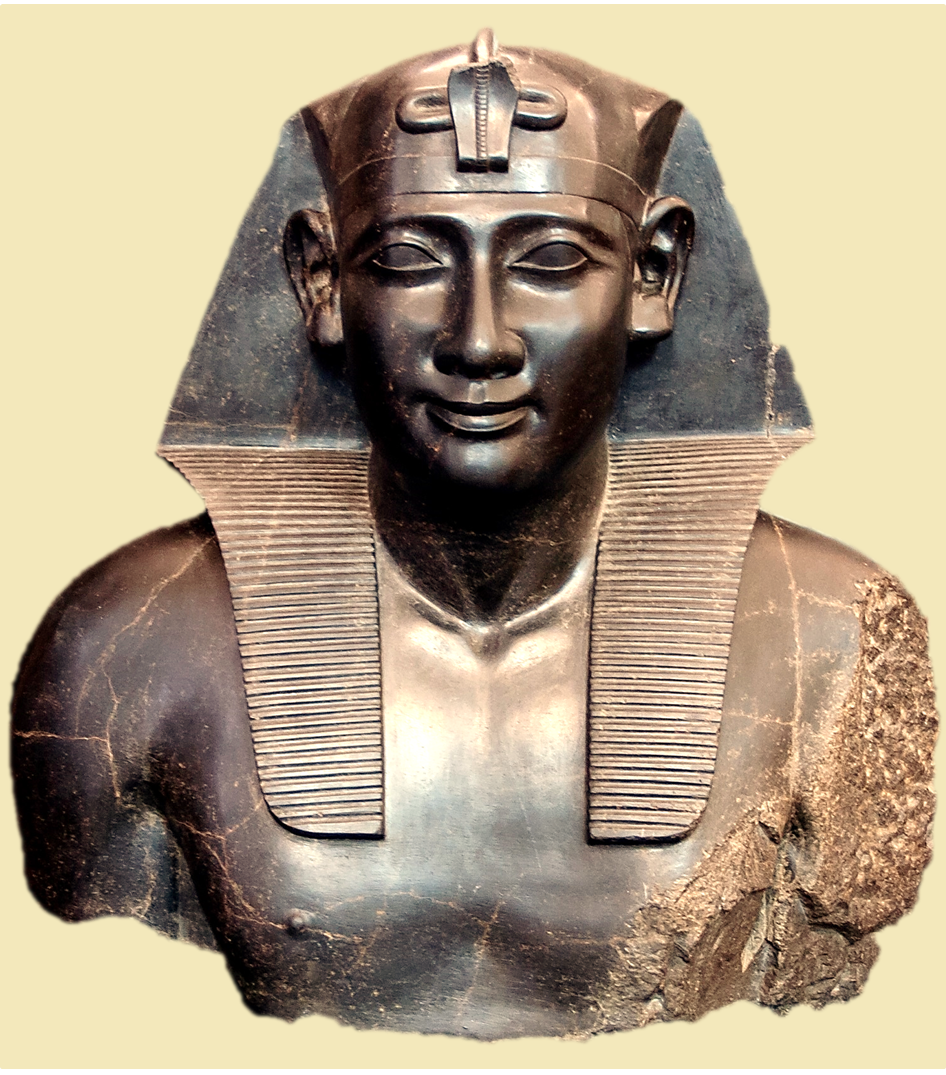
Agathocles at that time could also count on the alliance of the local populations, since the king of the Libyans Ailymas (or Elymas-Elima) had become his ally; even if for some scholars Ailymas was the king of the Numidians and not of the "Libyans" as Diodorus wanted (Αίλύμαν τόν βασιλέα τών Λιβύων); based on the fact that the term Libyan was very generic. In support of this hypothesis it is reported that also Massinissa Berber leader who will become king of Numidia a century after the events of Agathocles was indicated with the title of king of the Libyans. However it cannot be excluded that Diodorus uses the correct title, without this implying an involvement of the Numidians (being a different geographical area from the one described for Massinissa).
Strengthened by the victories achieved, the Syracusans of Agathocles advanced even further into the Tunisian region, descending towards the gulf of Gabès here stood the ancient city of Thapsus (or Thapsos: Θάϕος) of probable Phoenician origins, since in Sicily, in the Syracusan area, there is an important ancient locality with the identical toponym taken by force by the army of Agathocles. After Thapsus, another 200 inhabited centers, definable as Libyan villages under the dominion of Carthage, came into the power of Agathocles.
Siege of Tunis: Another victory for Agathocles
The army of Syracuse spent many days marching. Meanwhile, the Carthaginian troops recalled from Sicily had arrived and also poured into the headquarters in Tunis. Agathocles, informed of the situation, now close to Tunis, ordered his men not to light fires during the night march, so as to take the unsuspecting Carthaginians who occupied the camp completely by surprise. Once again he had the upper hand and at dawn, in the clash that began between the two sides, he managed to liberate his headquarters. The Carthaginians suffered over 2,000 casualties and several prisoners taken by the Syracusans.
Meanwhile, the king of the Libyans broke his alliance with Agathocles, again going over to the Carthaginians. Agathocles then killed him, and with him killed many of his men. Despite the brief news, it represents the prelude to the clashes between the Syracusans and the local populations; the Libyans, whether they are Libyphoenicians or Nomads, will give Agathocles' mission quite a hard time.
The beheading of Hamilcar and his skull sent to Africa
After having tried in vain to take Syracuse by deception, making people believe that Agathocles had died with his entire army, Hamilcar nevertheless managed to penetrate into the city, leading his men into the Epipolis; the military city and the highest part of the pentapolis. But the assault was unsuccessful; Hamilcar was captured and his men dispersed. The Syracusans beheaded the commander-in-chief of Carthage in the public square and sent his head to Africa, so that a strong and clear message about the fate of the Punic siege could reach Agathocles from his homeland.
When the enemy's head reached the African port, Agathocles took it and mounted his horse. Brandishing Hamilcar's head, he went to the enemy camp and began to pace from one side to the other, carefully enunciating the words he was to address to the Carthaginians. He warned them the head of their suffete, which had arrived from Syracuse right under the walls of Carthage, was a terrible warning of the end that would await the enemies of the Siceliots. The Carthaginians, shocked by the brutality and gravity of the news, prostrated themselves on the ground, according to barbarian custom; the death of the king was a terrible event and they therefore began to doubt whether they would be able to achieve the final victory in that tragic war.
The military mutiny
The banquet, the quarrel and the killing of Licisco (Lyciscus)
Diodorus, in his twentieth book, attributes the beginning of the decline of Agathocles' fortune in Africa at a time not yet suspected to a quarrel between a high officer of the Syracusan army and Agathocles' eldest son, Archagathus. It all happened during an evening banquet to which Agathocles had invited the high officials of his army; among them was a captain named Lyciscus. Mugs of wine were flowing across the table, so Lyciscus, no longer inhibited, dared to say too much:
The accusation of Lyciscus was very serious, since the firstborn of Agathocles was accused of adultery, and the woman with whom it was committed was his father's beloved. Nevertheless, being a man of experience, well aware of the delicate balances that were created among the soldiers; of their strong solidarity, Agathocles pretended not to notice and smiled good-naturedly at the words of Lyciscus. Archagathus had a very different reaction and, not wanting to tolerate that laughter any longer, took the spear of one of the guards and killed Lyciscus in front of all the officers. At that point, sedition broke out among Agathocles' men. Lyciscus' body was placed back in the camp, inside his respective tent, which immediately filled with soldiers indignant at what had happened. The soldiers loudly called for Archagathus they wanted Agathocles to hand him over to them, so that they could do justice by killing him. If Archagathus was not handed over, then the death sentence would fall on Agathocles. What happened on the evening of the banquet soon involved the entire army, but the death of Lyciscus for many men represented only a pretext to carry out a rebellion that had already been in the air for some time due to the irregularity in the payment of the soldiers' wages.
Armed surveillance and the transition to the enemy
Even though it did not lead to further reckless actions, the situation remained very tense the area where Agathocles lived with his two sons and the rest of the general staff was surrounded and guarded by armed soldiers. The Carthaginians, hearing the discontent within the opposing army, came forward trying to bribe the men of Syracuse; offering generous rewards and higher wages to anyone of them who agreed to join the Carthaginian ranks. Many of Agathocles' captains allowed themselves to be bribed and defected to the Carthaginians.
Agathocles, realizing he was in grave danger, as there was a serious possibility that his men would hand him over to the enemy, once again relied on his dialectic and theatricality to resolve the long-standing situation, seeking to regain the trust of his army. He stripped himself (as he had already done during the assembly that had proclaimed him strategos autokratōr); he threw away his purple robe, a symbol of power and royalty, and dressed in the modest attire of a private citizen. Drawing his sword, he emerged from the tent and allowed the crowd of men to surround him and gaze upon him in solemn silence. Then he began to speak, reminding his soldiers of the hardships they had endured to get here and of the victories they had achieved under his leadership. Having said this, in light of the recent uncontrollable events, he told them that if he had to die, because he was ready to die for them, he would rather do so by his own hand than be handed over to the Carthaginian enemy. Then he drew his sword and was about to kill himself, but the crowd as he had probably foreseen stopped him, asking him to forget the accusations and to put back on the robe that was due to his high rank. Diodorus continues his account of the events by describing Agathocles' tears and the renewed desire of his army to fight the hated Punic enemy.
The Battle of Bagradas River
thumb|upright=1.2|The Medjerda River (ancient Bagradas).
Suddenly attacked by the Syracusans, the Carthaginians were forced to flee again. Attracted by the Syracusan dynasty's many victories, the Numidians decided to abandon their alliance with Carthage and enter into a new one with Agathocles. The Carthaginians, having learned of the new unfavorable developments, tried to recover by force the allies who had defected. Agathocles received news of the actions of the Carthaginians against the Numidians and therefore decided to leave the command of Tunis to Arcathus and to take with him in pursuit of the enemy 8,000 infantry, 800 cavalry and 50 war chariots led by Libyans. The Carthaginians were bringing back under their banner the Numidian population of the Zuphonians when Agathocles, after days of hard marching, reached them. The Carthaginians then sent some units of Numidians to harass the Siceliots; to prevent them from approaching as much as possible. Agathocles, seeing himself attacked by the natives, sent his slingers and his archers against them, at the same time he did not stop advancing. The Carthaginians crossed a wide river and entrenched themselves on a hill.
The battle site has been identified (though not with absolute certainty) in the flat areas of western Tunisia in Algeria, where there is the central part of the river bed of the Mejerda, the ancient Carthaginian Bagradas. Near the river a violent battle took place which saw the two historical warring parties opposed. The Syracusans were superior in quality, even if the Carthaginians as always could count on a greater number of soldiers, so Agathocles triumphed again.
thumb|upright=0.8|Silver tetradrachm minted by Agathocles in Africa, 309–308 BC, depicting the winged Nike, a triskelion, and his inscribed name (coin housed in the Altes Museum, Berlin).
During the battle, the Numidians did not intervene on behalf of either power; they simply waited for the defeated army to plunder its camp. Since the Carthaginians' loot was inaccessible at the time since the Syracusans were in fact forcing the Carthaginians to retreat to their own camp the Numidians decided to attack the Syracusan camp and, taking advantage of the distance from the main force, managed to seize plunder, even capturing some men. As soon as Agathocles realized what was happening, he stopped chasing the fleeing Carthaginian soldiers and went to confront the natives, winning victory and recovering much of the loot. To commemorate this new splendid victory over the Carthaginian forces, Agathocles erected a trophy and celebrated the event with his soldiers. It is claimed that the valuable Cyrenaic-type coins minted by Agathocles at the same time as the victory at Bagradas also belong to the memory of this battle.
During the battle he captured 1,000 deserters: Greek knights (500 of whom were originally from Syracuse and the other 500 Greeks from the allied forces) who had gone over to the enemy's side following the military sedition that Agathocles had laboriously quelled. The knights attempted to escape, barricading themselves inside a fortress in the area, but Agathocles defeated them and had them massacred. During the events that characterized the clash with the Carthaginians, Agathocles realized the unpredictability of the nomadic natives, and above all their dangerousness; he could not trust an alliance with the Numidians, who had shown themselves ready to side against him at the first opportunity. It was therefore urgent to find a new ally in Africa.
The agreement with Ofella and the betrayal
thumb|upright=1.2|Dunes in the African desert; Ophellas' journey to join Agathocles lasted two months.
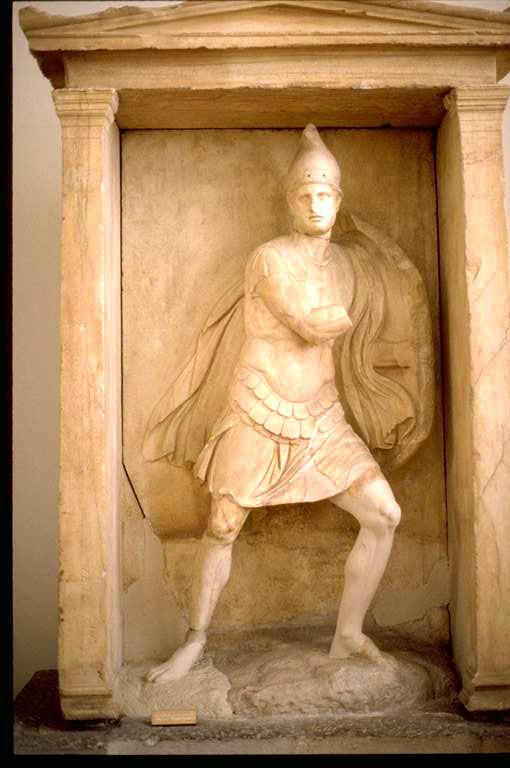
In 309-308 BC Agathocles sent his ambassador Horton to Cyrene with the task of reporting to the governor of Cyrenaica, Ophelas the Macedonian of Pella, that the Syracusan strategos wanted to conclude an alliance with him. Ophelas would have participated in the war against Carthage by contributing a military apparatus to add to the Syracusan one; in exchange Agathocles would have left him the entire dominion over Libya, since what the Aretusean dynasty was interested in was to possess the whole of Sicily.
The origin of Ophella remains unclear to this day it is debated whether he was a representative of the satrap of Egypt Ptolemy I Soter, since Cyrenaica had been conquered by the Egyptians or whether he was a Macedonian prince who had become independent from the kingdom of the Nile. In any case, he accepted the alliance. The Cyrenian in turn sent a decree to Athens in which he invited the Athenians to join him and Agathocles of Syracuse to fight Carthage and colonize new lands in North Africa. The further appeal of Ophelas, which in a short time involved a large part of the Greeks, is thought to have triggered the clash, datable to the same year of the above-mentioned alliance, between Cassander, who governed Athens through his trusted man Demetrius Phalereus, and Ptolemy who with Ophelas' move found himself with the Greeks belonging to the Macedonian rival on the borders of Egypt, with the prospect, completely unexplored and therefore full of possibilities, of a Hellenistic kingdom on the territory of Carthage.
Ofella sent out from Cyrene 20,000 men: 10,000 infantry, 600 cavalry, more than 300 charioteers and parabatai (companions in battle), 100 war chariots and 10,000 men "out of line" who were accompanied, many of them, with wives and children. For two months this multitude of people wandered through the Libyan desert, with the aim of reaching the camp of the Syracusans; many were the victims who remained in the sand because of the bites of poisonous animals, such as snakes, and because of thirst and hunger. Finally they reached Agathocles who immediately took care of giving them the necessary care after such a dangerous journey. For several days he made sure that they lacked nothing, then a sudden about-face occurred, a betrayal whose origin is not explained, in which Agathocles killed his ally Ophelas. after he had even “adopted” his son Heraclides. After eliminating Ophelas, Agathocles gathered the vast army of the former ally under his command and had the numerous colonists embark for the coasts of Sicily, landing at Syracuse.
Coup d'état in Carthage
Bomilcar, in a period without clashes with the Syracusans, advanced towards his homeland; he tried to become its tyrant, most likely taking advantage of the anxiety that the new armies arriving from Cyrene had caused in the Carthaginians. The Carthaginian planned to move the citizens and elite troops to a new site, which he called the New City, to distinguish it from ancient Carthage. He then ravaged the old capital, bringing civil war to every corner. A huge revolt broke out involving all the Carthaginian citizens, who were committed to a common effort not to give in to a tyranny, despite the massacre they were suffering at the hands of Bomilcar's forces. He was finally captured, tortured and put to death.
Justin, and with him also the Christian historian Paulus Orosius recalls a version with different details, but in all probability complementary to the Diodorus one (even considering that Justin shows that he follows a basic source different from the Diodorus one; he follows the Timaean version) after a violent battle with the Syracusans (a battle that is not mentioned in Diodorus), with losses suffered on both sides, the Carthaginians were so desperate that if a rebellion had not broken out in Agathocles' army, the Sufete would have gone over to his side, handing over Carthage and his army to Agathocles. Bomilcar's intentions were discovered, however, and the Carthaginian ruler was condemned to crucifixion in the public square; here Bomilcar, from the top of the cross, spoke, venting his anger against his people, considering them unjust and deceitful; He mentioned all the obscure precedents of the Carthaginians towards the former Sufetes. Particularly significant, since it aimed at explaining the conflict in progress, was the accusation directed against those who had condemned Hamilcar, his paternal uncle, who had done his utmost to establish friendship between Agathocles and Carthage, in vain, since Carthage had preferred to have war from the Syracusan, rather than peace, going to condemn the actions of the Sufete. When his words had gathered a very large crowd, he breathed his last.
Agathocles learned too late of the crucifixion of Bomilcar and of how close he had come to taking Carthage into his own hands. Diodorus also agrees on the lack of communication between the two sides, and devotes more than one passage to the regret that the Carthaginians and Syracusans must have felt for not having known, both, what was happening in their respective camps: on the part of Agathocles, the temporary confusion of the new soldiers left without a leader after the killing of Ophellas, and therefore easily blackmailed by the enemy; on the part of Carthage, the civil war, which had made the Punic capital absolutely vulnerable and therefore conquerable if only Agathocles had taken advantage of it.
The alliance with Ptolemy of Egypt
thumb|upright=1.3|The Athenaion of Syracuse (incorporated into the Cathedral of Syracuse), beneath whose foundations the vase of Ramesses and many other Egyptian artifacts were discovered.
Agathocles is unanimously recognized as the one who initiated the close ties between Egypt and Sicily. However, before analyzing the nature of the alliance between Agathocles and Ptolemy, it is worth noting that the relationship between Agathocles' capital, Syracuse, and the land of the Nile did not originate in the late 4th century BC, but had roots in much earlier times.
In fact, the oldest Egyptian find in Sicily comes from Syracuse. it is a spherical balsam vase, produced in the Nile valley, which bears the image and name of the pharaoh Ramses II (Ramses is in the act of offering an unidentifiable object to the goddess Hathor); the dating initially proposed for this precious find was set between 1350 and 1300 BC, but since the hieroglyphics engraved on it lead to the reign of Ramses the Great it has been proposed to correct the date by at least thirty years.
This find, together with many other Egyptian and Egyptian-like finds (mostly votive material) was discovered under the foundations of the Athenaion, in an archaeological layer dated to the 7th century BC, confirming that the city was already linked to a dense commercial network in archaic times with what was exported from Egypt; but not only commercially, being votive offerings in a sacred area (between the Artemision and the Athenaion and also in other sacred places of the city), there must have been an important cultural influence on the first Syracusans. The people who brought the artefacts to it were probably the peoples geographically close to Egypt; in this regard a historian has stated that:
thumb|upright=1.2|left|At left, a gold coin minted by Agathocles; at right, a silver coin minted by Ptolemy I. Both depict Alexander the Great wearing an elephant-scalp headdress; the similarity illustrates Agathocles' apparent desire to associate his coinage with that of the Egyptian satrap.
For the following centuries, archaeological findings remain silent, but from Agathocles onwards this archaic relationship is revived and becomes much more evident. According to some historians, the alliance between Egypt and Agathocles' Sicily began when the Syracusan contacted Ofella; if we accept the hypothesis that he was his representative; here the alignment of the coinage between Ptolemy and Agathocles, starting from the year 308 BC, becomes a clear sign of complicity. in this perspective it is also supposed that before killing Ofella, Agathocles contacted Ptolemy (to avoid that he misunderstood his gesture and believed him to be an enemy of Egypt), convincing him of the need to eliminate the ambitious figure of the Cyrenian.
Assumption of the royal title and marriage to Theoxena
Agathocles in 307 BC, during his stay in Africa, assumed the title of basileus. assumed the royal title after the satraps Antigonus and Demetrius did so (the popular proclamation would come later, during the first return of Agathocles to Sicily). He was the first who succeeded in having himself crowned king by the Arethusaean pentapolis, whose republic had never allowed anyone to assume this title; Agathocles had succeeded in transforming the powerful dynasteia into a Hellenistic monarchy.
Regardless of the ambiguous past with Ophela, Agathocles appears very close to Ptolemy, the satrap who transferred the body of Alexander the Great to his capital Alexandria. which among other things, according to a testimony of the historian Statius, would have been embalmed with Iblean honey, produced in the chora of Syracuse becoming the husband of one of his daughters Theoxena.
thumb|upright=0.9|left|Remains of Alexandria in Egypt, a city that welcomed numerous Syracusans and Siceliots; among the most famous were Archimedes and Theocritus.
thumb|upright=0.9|Egyptian papyrus growing along the Ciane River near Syracuse (the only place in Europe where the plant grows naturally and abundantly).
The Egyptian princess came from Macedonia; her mother Berenice I, a descendant of Antipater (the regent of Alexander the Great's empire and father of Cassander), had conceived her with a Macedonian general, but when he died, Berenice followed her cousin Eurydice, the first wife of Lagides, to Memphis. The satrap fell in love with Berenice and married her, adopting her children and giving her the title of Queen of Egypt. Agathocles therefore became Ptolemy's son-in-law in all respects; moreover, since the heirs to the throne came from Berenice's line of succession, Agathocles became the brother-in-law of the future king of Egypt Ptolemy II, Theoxena's half-brother, and, significantly, the brother-in-law of Magas, the future king of Cyrenaica and Theoxena's brother. With this kinship Ptolemy ensured the alliance of Agathocles and his loyalty in the event of his future return to Africa and another intervention involving the borders of Egypt. For his part, with this union Agathocles greatly consolidated his position in the interstate panorama and brought a new powerful ally to Sicily.
The dating of this marriage is debated: there are those who maintain that it took place in Africa, but the information on the wedding is too brief and does not allow us to clarify the context; nor do we have any evidence that attests to the physical presence of Agathocles at the court of Egypt and there are those who think instead that the marriage dates back to the return of Agathocles to Sicily, where he was joined by Theoxena. The alliance between Ptolemy and Agathocles did not end with this marriage: after the African expedition, Agathocles gave his daughter Lanassa in marriage to the young Pyrrhus, heir to the throne of Epirus and son-in-law of Ptolemy (Pyrrhus had married Antigone, sister of Theoxena), who held him as a hostage at his court following a pact sealed with Demetrius I Poliorcetes (future son-in-law of Agathocles).
Agathocles' legacy is a vast one that extends from Sicily to Egypt with Theoxena he generates children who will arrive in Egypt and here will continue the Agathoclean lineage; while in Sicily this alliance translated into political and cultural understanding; there are those who attribute to Agathocles the introduction of the cult of Isis in the various Sicilian poleis. and those who trace the arrival of the Egyptian papyrus plant back to him, which notoriously grows spontaneously in the waters of Syracuse at least since the third century BC (but it is claimed that it was already cultivated from the sixth century BC; to delve deeper into the history of this plant in the city of Aretusa, see the sections: the discovery of papyrus and the Cyane papyri and the weaving of the first paper). Certainly this alliance paved the way for future relations between Ptolemy's heirs and the Syracusan court and consequently with Sicily which it controlled.
Operations west of Carthage
Fall of Utica
thumb|upright=1.2|The archaeological site of Utica.
After assuming the title of basileus, Agathocles sought to lay siege to the African city of Utica whose people had at first shown themselves to be his friends and then had abandoned him; induced by the Carthaginian action which was really spending a lot to recover the allies that the Syracusans were conquering. Because of its proximity to Carthage (Utica was only a few kilometers from the Punic capital), its antiquity (the Phoenicians founded Utica first and then Carthage) and its importance (Utica has been defined as the most important city of the Carthaginian empire), possessing it was a notable challenge for Agathocles.
The Syracusan army, now greatly increased by the union with the soldiers from East Africa, approached Utica, immediately alarming the citizens, who closed themselves inside the walls, but Agathocles managed to capture 300 Uticans who had not had time to escape in the surrounding countryside. The 300 were used as hostages by the basileus who showed them to the people of Utica, promising that if the city were handed over to him, he would return the 300 fellow citizens safe and sound. However, the Uticans refused to surrender, whereupon the Syracusan unleashed a cruel revenge against them. He had the prisoners tied to war machines which he brought under the walls of the city. The image of what was about to happen did not pity the besieged Uticans, who in response brought their soldiers to the walls, ready to repel the assault. Agathocles added catapults, slingers and dart-throwers to the siege engines. In order to block the enemy's advance, the Uticians were forced to repeatedly hit their fellow citizens tied to the machines, some of whom belonged to the Utic nobility, but they did not stop hitting, transforming the torture of the hostages into a sort of crucifixion according to the words of Diodorus. using every throwing weapon at their disposal.
Agathocles, seeing that the Uticians had no intention of giving in, had the entire city surrounded and, finding a weak point in the walls, had his armed men enter inside, causing panic among the population. The houses and temples were not spared. The massacre was followed by the plundering of the Uticians' goods and the imposition of an armed garrison. The capture of Utica is counted among the great massacres of Agathocles during the war. Polybius states that Agathocles' attitude must be divided into two different phases, a purely warlike one and a much more peaceful one; the first phase was that of the great war which began with Agathocles' first exile (as early as 330 BC), intensified at Syracuse (319–316 BC), where oligarchs and democrats clashed violently, and eventually involved first the whole of central and eastern Sicily (314–311 BC) and later even Africa and Carthage (from 310 BC onward). Utica must be viewed within this context Agathocles' war had not yet ended. His conduct, though cruel, should be considered in light of a broad military conflict and the political objectives he sought to achieve.
Capture of Bizerte and alliances with African peoples
thumb|upright=1.2|left|Bizerte, a city fortified by Agathocles; the Syracusans established their naval shipyards there.
After Utica, the army moved further west, reaching an area rich in fresh and salt water. Here stood the city of Hyppo Acre or Hippo Diarrhytus or Hippo-Zaryte (today's Bizerte) defended by a large internal lake, connected to the sea by a canal. To conquer it, it was necessary to resort to a naval battle; with ships probably coming from Utica. The historian Appian of Alexandria adds further information on this part of Africa touched by Agathocles, he narrates that the dynast built a tower thirty stadia away from Utica and that he took possession of Hyppo Acre, a city that the Syracusans greatly fortified, with the probable aim of making it a new general headquarters.
The tower was to serve as a defensive point for the road that led from Utica to Bizerte. Thanks to the possession of the eastern coast of Tunisia, even before this naval battle there is news of ships owned or built by the Syracusans in Africa (those sent by Agathocles to Sicily during Hamilcar's trap; the one that served to bring the ambassador Horton to Cyrene; those, certainly numerous, that allowed the colonists of Ophella to reach the coasts of Europe), but in Bizerte the project must have been more grandiose if Appian speaks in the plural of shipyards.
Moreover, Agathocles must have been well aware that to besiege Carthage it was necessary to have a fleet, as well as numerous men, given the easy access to the sea that the natural position provided to the Punic capital. At this point the Syracusans were masters of all the main maritime places in the Carthaginian region: from east to west from the present-day Libyan border to the Algerian one Agathocles had conquered the ports and emporiums of Carthage, as well as placing the populations of the internal region under his domination (nor would the conquests end here). This was the moment of greatest difficulty for Carthage, which saw its allies defect one after the other to surrender to Agathocles; almost all abandoned the Carthaginians, except the Nomads, who partly sided with Agathocles and partly wanted to wait to see how the conflict, still in progress, would end. Agathocles had reached a position where he could finally devote himself to the operations that would lead to the siege of Carthage itself. However, seriously worrying news arrived from Sicily to distract him.
Agathocles' first departure
Situation in Sicily
The Syracusans at home and in Africa had directly or indirectly eliminated four kings of Carthage in the space of a few years Hamilcar I of Carthage, Hamilcar Gisgonius, Hanno I the Great, and Bomilcar. They had also severely reduced the number of soldiers the Carthaginians could rely on to defend their empire in the Mediterranean, not to mention the high and serious number of allies lost and cities occupied by the enemy who now surrounded them at home. Never before had Carthage found itself in such a precarious and difficult situation.
Many things had changed since the departure of Agathocles in 310 BC; in the years that had passed the alliance between the rebel Syracusans led by Dinocrates and the Carthaginians had broken down; a consequence of the war, now known to most, against the centuries-old and hostile Punic rival. The bad situation of the Carthaginians did not remain secret to the Greeks of Sicily, who, attracted by the victories of the Syracusans, believed that the time had come to drive the Punics from the island once and for all. Those who took command of this imminent liberation were not the Syracusans too exhausted to have to simultaneously repel the Punic forces at home and to have to attack them in Africa nor the rebels of Dinocrates who, although freed from the Carthaginians, seemed to want to give precedence to the civil war with the Syracusans of Agathocles; Agrigento, which during the first phases of the war had resorted to Carthage together with Gela and Messina to unleash it against Agathocles, and Syracuse, which entrusted the command of its troops to Xenodicus, who began to successfully liberate various Sicilian centres from Carthaginian domination. From the very beginning the Agrigentines showed their desire to conduct a double war: against the Barbarians and against Syracuse, longing to replace its hegemonic role. The proclamations of freedom and autonomy brought numerous Sicilian allies to Agrigento of Greek and Sicilian ethnicity. The Agrigentines attacked Agathocles' generals, taking away cities such as Gela, Enna, Erbesso, Camarina, Leontini and numerous others. Syracuse, in addition to facing the long siege of the Carthaginians, placed a few meters from its walls, and the warlike actions of the oligarchic exiles, also had to defend itself from the aggressive Greeks of Sicily led by Agrigento and his general Xenodicus.
Agathocles embarks and lands at Selinunte
thumb|upright=1.3|The acropolis of Selinunte, a colony of Megara Hyblaea, where Agathocles landed after returning from Africa.
This news reached Agathocles in Africa; the situation was extremely grave and unacceptable for the dynasty. He was in Africa precisely to defend his dominion in Sicily; if everything he had fought so hard for was being taken from him by the Siceliots, there was no point in remaining in Africa or taking Carthage. He then decided to leave immediately, since his presence was urgently needed in the affairs of Sicily. He had fast ships (penteconters) built and embarked with him 2,000 soldiers, leaving the bulk of the army in Africa, under the leadership of his son Arcagatus.
Agathocles landed in the western part of Sicily, which at that time was undefended, almost completely abandoned by the Punic soldiers; engaged in the various fronts of a conflict that was increasingly taking on the appearance of a total war (the Punic in turn had to divide their men between Syracuse, Libya and recently also against the allies of the Agrigentines). The basileus landed at Selinunte. His presence was immediately felt on the Mediterranean island; he conquered one after the other the cities that appeared before his path; after the capture of Selinunte it was the turn of Heraclea Minoa cities long disputed by the Carthaginians and the Syracusans and then of other important centers of the Elymians, until he reached his native place the city of Terme; He bound himself to its inhabitants with an anti-Punic pact and then turned his gaze towards Cefalù, took it, and continued on, crossing the whole island. His final objective was to reach Syracuse, where he had not set foot for four years; waiting for him, outside the walls, were ranks and ranks of Carthaginian soldiers who, despite having their homeland surrounded by the enemy, had not yet stopped holding Syracuse in check.
Agathocles routed Xenodicus, but with his presence he inflamed another more dangerous enemy his former childhood friend Dinocrates who, collecting the legacy of the Agrigentines (the people who had entrusted themselves to Agrigento now placed their hopes in the figure of the oligarchic Syracusan), wanted to come to the clash with Agathocles. But the latter, almost completely deprived of his army that he had left in Africa to continue the war in Carthage, preferred to avoid the direct clash with Dinocrates, who could count on a greater number of armed men, and continued with his rapid victorious attacks.
Continuation of the war in Africa
The Syracusan army under the leadership of Arcagatus
Diodorus states that before his departure Agathocles had already become superior to the Carthaginian forces in Africa in number of allies and in number of soldiers. However, his temporary absence postponed the siege of Carthage. Archagathus, having become the new commander of the Syracusan army, entrusted part of the troops to Eumachus, one of Agathocles' generals; he led the men into the interior of the region, towards the southern border of the Carthaginian empire.
Eumachus' expedition
thumb|upright=1.2|left|The hills of Thugga viewed from the Roman archaeological site; centuries after Agathocles' Syracusan expedition to Africa, the Romans would conquer the same region. Having set out on this expedition, the soldiers led by Eumachus entered probably following the course of the river Bagradas into the part of Africa least known to the Greeks, due to the presence of Carthage, which had jealously defended its borders for centuries. Here they first took possession of a large city belonging to the Numidians called Toca its specific geographical position is still debated today, but most maintain that it should be identified with Thugga (or Dougga), the important city of Berber origin, which will be known as the capital of the kingdom of the Numidians, which arose in the hilly area of internal Tunisia, in one of the most fertile areas (in the natural direction of expansion for whoever enjoys possession of the peninsula of Cape Bon), bathed by the southern course of the river Bagradas.
Toca represented the gateway to those territories where the power of Carthage was still strongly opposed by the local populations; in fact, the region in which it arose was mostly under the control of the Libyans (not far from the place where Agathocles had made an alliance with the indigenous king Ailymas) and it was in this region that Eumachus' soldiers subdued many nomadic populations. After Toca, the Syracusans began a journey that focused their attention more on the various geographical discoveries than on military objectives, since they entered the heights and the banks of the Atlas) places that were completely mysterious at the time of Agathocles, as they had not yet been explored by the Greeks or at least not documented. They took the city of Fellina or Felline (probably identifiable with Tabarka) whose surroundings were inhabited by a population of nomadic shepherds known as Asphodels, they were dark-skinned and therefore similar to the Ethiopians; the Syracusans subdued them with the use of force
The third city that Eumachus took possession of was Meschela, which is also difficult to identify it has however been proposed to place it on the border between Tunisia and Algeria, which Diodorus describes as very large and inhabited by the Greeks who had returned from Troy. The epic connotation is probably the result of very ancient testimonies of the first Greeks who had passed through those places, perhaps in the guise of explorers/traders, leaving a light and limited Hellenization.
thumb|upright=1.4|The archaeological site of Hippo Regius (Algeria), a city conquered by Eumachus.
Eumachus' soldiers marched towards the end of their expedition along the coast in a march towards the sea which had probably already begun before reaching Meschela; here they conquered the city of Hippo (ancient Hippo Akre, then Hippo Regius, today's Annaba or Bona), which Diodorus says was the same name as Hippo already taken by Agathocles. Hippo, located at the mouth of the river Seybouse, was the seat of the Numidian kings and had a large port. Finally, Akris was taken; an independent city which Eumachus allowed to be plundered by the soldiers after having enslaved its population. Eumachus' men returned victorious from Arcagathus, and the general Agathocles distributed the spoils among the army. Arcagathus, satisfied with the success of this first expedition, was persuaded to send Eumachus and part of his troops back on a new exploration.
Eumachus's second expedition
The expeditionary force, once again led by Eumachus, passed through the cities it had conquered and advanced further into Libya. Almost suddenly a barbarian city called Miltine appeared before the Greeks; here Eumachus' army suffered a harsh reprisal from the local population, who surrounded the Syracusans in the streets and managed to overwhelm them. Eumachus, who evidently did not expect such a fierce reaction from the barbarians, lost many of his men in the attack and, driven from the city, took a route that led up a long and high mountain range. This was the first defeat of the Syracusans in Africa up to that point they had always had the upper hand, both over the Carthaginians and the Libyans. From this point onwards modern historians have serious difficulties in tracing the route taken by Eumachus; Diodorus' narration becomes less specific and is enriched mostly with details regarding the traditions of the local populations that the apparently lost Syracusans meet on their way.
Pithecussae:a city where monkeys were worshipped
thumb|upright=1.2|A family of Barbary macaque, the primate species most widely distributed across Tunisia, Algeria, and Morocco.
Eumachus advanced into a mountain range which Diodorus describes as devoid of any kind of bird, because the many wild beasts which populated those high mountains did not allow birds to nest there. Through these mountains he came to a region inhabited by very many monkeys ; here stood three cities whose name translated into Greek was Pithecusa, or "city of the monkeys". Eumachus' men were surprised to find that in those cities monkeys were worshipped, just as dogs were worshipped by the Egyptians. They lived in people's houses. Food was placed at the disposal of the primates, so that they could take it whenever they wanted; parents gave their children the names of monkeys, just as the Greeks gave their children the names of gods.
In these cities, anyone who killed a monkey was punished with death; as if the most impious of divine sacrileges had been committed. For this reason, among the people of Pithecusae, there was a saying that whoever was killed with impunity had paid for the blood of the monkey. The Syracusans took one of these Pithecusae by force, and after destroying it they came to terms with the other two. Eumachus, having received word that the Barbarians were gathering forces to attack his expedition, hastily gathered his men together to leave there and reach the sea as quickly as possible.
The three armies of Carthage
thumb|upright=1.3|Ruins of the Punic harbor of Carthage; its geographical position provided a secure and fortified access to the sea, which was the city's greatest strength.
The Carthaginian Senate took advantage of Agathocles' absence to organize a massive attack against the invaders; it managed to bring out from the city of Carthage a huge force of 30,000 armed men and cunningly, and riskily, divided them into three separate armies. He made this great effort for several reasons; first of all, he wanted to demonstrate to his allies that Carthage was still capable of attacking; he would not remain passive and await the enemy's siege.
Secondly, the Carthaginians were beginning to suffer from hunger; with the war in progress it was not possible to cultivate the fields and a severe famine was looming on the horizon. The third reason is certainly the most significant. Carthage was counting on the fragmentation of the opposing army; if the Carthaginians sent three armies to three distant territories, to defend them the Syracusans would be forced to divide their armed forces into three parts. And certainly the defeat suffered by Eumachus at Miltine had not escaped the watchful eyes of the Carthaginians; a defeat that had come about precisely because Arcagathus had divided his forces.
The Carthaginians' ambushes
Agatharchus, seeing that the whole of Africa, which had been under the dominion of his father, had been invaded by the arms of the Carthaginians, fell into the trap of Carthage and made the mistake of dividing the army into several parts, just as the enemy wanted. He entrusted a first part to Eumachus, sending him to defend the coast; a second part he gave to the general Aescrion and sent him to defend the conquests in the central area; still another part he placed under his direct command and also left a good garrison of men in Tunis, the main operational base. All of Libya was soon surrounded by weapons and it was clear to the civilians that a crucial and decisive point in the war between the Greeks and the Carthaginians had been reached. The Carthaginians set up a first ambush for the general Escrion while he was advancing in the area assigned to him by Arcagathus, the commander of the Carthaginians, Aderbale, attacked him by surprise and massacred with his army 4,000 infantry and 200 cavalry of the enemy forces; during the ambush Escrion also died.
A second ambush was planned against Eumachus's contingent the experienced captain, still laden with the spoils of the cities he had conquered on his last expedition, crossed paths with the Carthaginian general Himilco. Himilco had set a trap for the Syracusans he had hidden part of his troops inside an unspecified city, ordering them to emerge into the open only when the Greeks passed through. He then went to meet Eumachus and, after a brief battle, feigned retreat and rushed his battalion to the pre–arranged point with the rest of his men. The Syracusans, accustomed to pursuing fleeing Carthaginians, believed Himilco's feigned panic and gave chase. However, when they reached the city occupied by the Carthaginians and saw the enemy army suddenly regrouping, they were struck by dismay, and the element of surprise did the rest. Eumachus and the scattered soldiers wanted to return to their trenches, but the Carthaginians had blocked the access route, so they were forced to find refuge near a hill completely devoid of water. Forced to remain without water or food, with serious wounds sustained in the battle, Eumachus' contingent was almost completely exterminated of 8,000 infantry only 30 survived and of 800 cavalry only 40 managed to save themselves. Arcagatus, shocked by the gravity of the situation that had arisen, withdrew with his contingent to Tunis, which had not been attacked by the Carthaginians. Aderbale and Himilco had won a resounding victory; the fruit of cunning rather than courage, since to defeat the Syracusan army it had been necessary to fragment it and take it by calculated surprise attacks rather than to confront it openly.
Return of Agathocles
Arcagato's message
Arcagatus sent for the survivors of the battles throughout Libya from the eastern coast to the western one. Having gathered the survivors he decided to write an urgent message to his father, informing him of the gravity of the situation in Africa and of the need for his speedy return to the battlefield.
The Libyan allies, ready to change sides, abandoned the defeated army and returned once again under the banner of Carthage. Himilco understood that it was not the case to loosen the grip and so he moved with his army, which now had numerous allies, near Tunis and here he set up a camp near that of Arcagathus. The Carthaginian isolated the Greeks by cutting off any access route to the region and therefore preventing the supply of food, hoping in this way to starve them out.
The defeat and sacrifice of the prisoners
The Carthaginians did not want to engage in a new battle with the Syracusans they preferred to wait until hunger had finished what they had begun with the ambushes; a surrender by exhaustion was their goal. Moreover, the Carthaginians enjoyed an almost inaccessible position and had food in abundance, which is why they did not see the point in fighting yet another battle. Agathocles, however, had at his disposal 6,000 Greek infantry and an equal number of Celtic, Samnite and Etruscan mercenaries. To them were added 10,000 Libyans, whom, however, he could not fully trust. The Libyans, however, brought him a large number of war chariots about 6,000, to which Agathocles added 500 cavalry. The basileus failed to lure the Carthaginians onto the plain, where the terrain would have been much more favorable to the Greeks, but decided to lead his men onto the high, rugged terrain from which the Carthaginians observed their approach. The battle came to a close, and Agathocles resisted well the outcome of the battle, despite the Carthaginians numerical superiority, was uncertain.
It happened, however, that Agathocles' mercenaries gave up, immediately followed by the rest of the troops. Agathocles had to order a retreat. While they were running towards their camp, they were chased by the Carthaginians who, being on a slope and having a strong number of men, had an easier time catching the enemy soldier. The Carthaginians during their pursuit were very careful not to injure the Libyan soldiers who were fighting for Agathocles at that moment; obviously they did this because it was essential for Carthage not to antagonize the Libyan ethnos, especially in a time of grave scarcity like that. Instead, the Greek soldier and the mercenary was recognized by the weapons he was carrying and was therefore killed or captured by the Carthaginians. Agathocles reached the camp and his army counted about 300 dead as a result of this battle. The Carthaginians that night, to celebrate the new victory achieved, sacrificed the most beautiful prisoners of war they possessed; they did this to thank the gods for having favored them against the invader Agathocles.
The fire at the Carthaginian camp
thumb|upright=1.3|Reconstruction of the acropolis of Carthage on display at the Bardo National Museum in Tunis.
That night a great fire broke out in the Carthaginian camp, started by the wind which spread the fire from the altar of victims, who were being burned alive, right into the tents of the Carthaginian commanders. In a short time the whole camp began to burn and many Carthaginians died in the flames; Diodorus states that this death was a divine punishment for the misdeeds of the Carthaginians and for their terrible sacrifices on prisoners of war.
Meanwhile, 5,000 of the Libyans who had fought for Agathocles that same night decided to defect to the Carthaginians, so they went to their camp, but the Carthaginian guards, seeing them arrive in the darkness, believed that the whole army of Agathocles was attacking them, so they raised the alarm. The Carthaginian army, which was already in chaos because of the fires it had to put out, was left without commands and, wanting to defend themselves from those they believed to be the Syracusans, they began to strike blindly, very often ending up fighting and killing their own comrades. In their flight, many Carthaginian soldiers fell from steep cliffs; in the great massacre that followed the fire, 5,000 Carthaginian soldiers were killed, while the rest took refuge within the walls of Carthage, bringing agitation and fear there too; the citizens in fact believed that Agathocles had scattered their army and that therefore the siege was imminent.
The Libyans, the authors of such a tumult, returned to Agathocles's camp, but there too they were met with arms: the Syracusan guards, as well as the Carthaginian ones, mistook them for the enemy army and gave Agathocles the alarm; the dynast then ordered them to take up arms and prepare to fight. The flames and the shouts in the Carthaginian camp were loud and audible, so that the Greeks really believed that Carthage was moving its troops against them at night. The same riots that had broken out in the Carthaginian one also occurred in the Greek camp, with the Greek soldiers killing each other in the darkness and in panic. Only in the morning did the gravity of the disaster become clear Agathocles had lost 4,000 of his men in this way. Following this, the Libyans abandoned Agathocles altogether, and with these defections and the decimation of their own soldiers, the Syracusans no longer had the numbers to face a new battle. Agathocles then decided that the time had come to leave Libya, but he realized that he did not have enough ships to transport all his men from Africa to Sicily.
Rebellion of the army and imprisonment of Agathocles
If Appian's report is true, and Agathocles had therefore prepared a fleet in Bizerta before his departure, this must evidently have remained blocked in the city occupied at that time by the Carthaginians. Justin, as often happens, diverges from Diodorus's source according to his source, the idea of abandoning the army in Africa occurred to Agathocles not because of a lack of ships or purely strategic concerns, but because of the hatred and resentment the soldiers had developed towards him. Justin, who follows to the letter the writings of Timaeus of Tauromenium, Agathocles's bitter rival, who had been exiled to Athens by him, presents the affair as a betrayal by the Syracusan towards the army and his own sons.
thumb|upright=1.2|left|Numerous Corinthian-style helmets (the style used by the Syracusan army) on display in the museum of Olympia.
The Roman historian claims that when Agathocles landed in Libya for the second time, he found his army furious with him because he had not received his pay for some time; a shortfall in payments attributable to his son Archagatus. Justin, however, is unaware of Eumachus's expeditions and the wealth repeatedly distributed among the soldiers. Agathocles restored calm by telling them that the money would come from the capture of the next city, then urged them to fight and led them in an attack against the Carthaginians (which is probably the same one described by Diodorus). Justin calls this attack "reckless," while Diodorus calls it courageous. However, Timaeus never acknowledges Agathocles's merit; he merely denigrates him. Thus, the blame for the ensuing defeat fell on Agathocles; the men would accuse him of taking the African war too lightly and, moreover, returned to demanding payment for their war service. At this point, Justin narrates, Agathocles secretly fled the camp taking with him only his son Archagatus.
This news contradicts the source of Diodorus who is probably Duris according to which Agathocles did indeed flee from his camp but with his son Heraclides and not with Archagathus. According to the historian of Agira, Agathocles' choice was influenced not only by the fact that there were not enough ships to transport the entire army, but also by a careful reflection on the moves of Carthage, which, master of the African sea, would never have allowed the invaders to leave Ancient Libya with Agathocles still in command with impunity; well aware that they would sooner or later return to its soil; at the very least Agathocles would have had to end up in the hands of Himilco and Adherbal to allow the troops who had surrendered to reach Sicily. The dynast then decided to flee secretly and leave with a few men and his youngest son, Heraclides, leaving Archagathus because of resentment for Archagathus' alleged intimate relations with Alchias and for his too bold nature that would have led him sooner or later to a revolt against his father. However, according to Diodorus, Archagathus discovered his father's escape plan and denounced him to the army. Agathocles was then stopped, bound and imprisoned in his own camp.
Second departure of Agathocles
The abandonment and the landing in Sicily
With no commander, the army fell into disarray. Diodorus relates that one night, while Agathocles was being held prisoner, a rumor spread among the soldiers that the enemy was approaching the camp to launch a new attack. The men armed themselves and gathered, but since there was no one to give orders, they were left uncertain what to do. Agathocles's guards, also frightened by the lack of leadership, took Agathocles in chains and brought him before the soldiers, thinking that at that time it was the right thing to do. The men, seeing him before them, were filled with pity and a desire to have him back as their commander, so they shouted with one voice for him to be released. But seeing himself free, Agathocles took advantage of the general confusion to leave the camp secretly once more. He managed to embark, setting sail with very few men on a single ship. His sons both remained in Africa. Diodorus states that Agathocles set sail from the African coast when winter was about to arrive (between October and November) when the stars Pleiades set, says the Diodoran account.
Justin's narrative states that the soldiers, as soon as they heard of Agathocles' new escape, became extremely worried and said they had been abandoned by their king:
They wanted to pursue Agathocles, but the sudden attack of the Numidians (to be connected with the attack which threw the army into confusion, of which Diodorus also speaks) forced them to return to the camp; however, they managed to capture Archagathus, who during the flight had separated from his father.
thumb|upright=1.3|The Greek temple of Segesta. After enslaving the Segestans, Agathocles renamed the city Dicaeopolis and established a colony there.
The two main sources do not even agree on the return of Agathocles to Sicily, according to Justin, Agathocles, having embarked only with the men necessary to govern the ships, headed directly to Syracuse and concludes the narration of the African chapter with an evidently biased exclamation: "a king deserter of his own army, a father traitor to his children!" concludes Justin with surprise.
Diodorus' ending is different, as he states that Agathocles' landing took place again in the Punic part of the island. After having summoned part of his Sicilian army, he went to Segesta. In the city of the Elymians, Agathocles committed a vast massacre because, lacking a significant number of men and money, he had asked the city, which was his ally, to give him its goods, because he needed them to rearm. The Segestans, however, refused to give him the help he requested and Agathocles carried out one of his terrible revenges. Agathocles could not reach Syracuse because Dinocrates had taken most of the island from him and there was a shield of armed men blocking his way to his capital.
The killing of Agathocles' sons and his revenge
Abandoned in Africa, Agathocles' soldiers decided to punish their supreme commander by killing his two sons. Archagathus and Heraclides were then put to death. Justin recounts in detail the death of the eldest son, Archagathus he was led to execution by a Syracusan friend of his father, Arcesilaus. Archagathus asked him if he had considered the consequences of the act he was about to commit Agathocles would take revenge on Arcesilaus' sons once he discovered that he had killed his heirs. But Arcesilaus scornfully replied that the thought of knowing that his sons would live a few days longer than Agathocles' sons was enough to console him. Having said this, Archagathus was killed, and with him Heraclides. Diodorus, however, does not dwell on the individual killings, but connects the death of both sons to that of Ophella: according to the historian of Agira, Archagathus and Heraclides were killed in the same month and on the same day as Ophella; a divine punishment that was inflicted on Agathocles for having betrayed his Cyrenian ally.
Agathocles's revenge upon learning of the death of his two sons (and he would learn of it even before entering Syracuse, during the battles with Dinocrates) at the hands of the army was truly ruthless and unparalleled. At the outset, before departing for the African expedition, he had carefully compiled a list of the outlaws, ensuring that the families of the Syracusans were separated, precisely to discourage any potential sedition by one or the other; under penalty of punishment, the seditious family member would be punished. Filled with rage and grief, Agathocles sent a message to his brother Antandrus, who was governing Syracuse on his behalf, ordering him to round up every single relative of the Syracusan soldiers in Africa and kill them mercilessly women, children, the elderly, young men, illustrious citizens, no one was spared. They were led to a beach in Syracuse and there they were all slaughtered, until the sea, Diodorus claims, ran red with their blood.
Considerations
thumb|upright=0.8|The Philippic Histories of Trogus–Justin, containing the biography of Agathocles, published in a medieval manuscript tradition.
The story of the killing of the two sons and the subsequent revenge of Agathocles on the relatives of the soldiers do not show serious contradictions (indeed, when Diodorus narrates the revenge he seems to agree with the words of Justin, who through the dialogue between Archagathus and Arcesilaus gives us to understand that there was a plan concocted by Agathocles against the seditious) and are in themselves credible; rather, what leaves modern scholars perplexed is the alleged escape of Agathocles and above all the alleged abandonment of his own children, his precious offspring, as heirs of a basileus.
According to De Sanctis, for example, Diodorus is clearly wrong in asserting that Agathocles had any hatred towards Archagathus, since the events in Africa have demonstrated the opposite: first of all, Agathocles did not hand over his son to the army when the soldiers demanded his killing, but rather offered to die in his place, and furthermore it is precisely to Archagathus that Agathocles entrusted the entire army when the hegemonic initiative of Agrigento forced him to divert his attention from the affairs of Africa.
According to De Sanctis and Langher two of the leading scholars of Agathocles's period the dynasty had every intention of quickly returning to Africa (the massacre at Segesta, committed because he needed to quickly raise money for armaments, is evidence of this), but unpredictable events, most notably the killing of his two sons, ruined his plans. De Sanctis states:
Langher also agrees with this line:
The confusion would have arisen due to the uncertainty of the primary sources themselves in narrating the ending: something must have escaped; there was almost certainly an escape, dictated by the need to escape the control of the soldiers who evidently had no intention of remaining without him in Africa once again (the army itself was not new to seditions Agathocles had already calmed another one in the past, using extreme means, such as the threat of taking his own life, in order to calm the spirits of his soldiers), but equally certainly Agathocles was aiming at a return to Tunis, confirmed by the presence of his two sons.
Aftermath
The agreement with Carthage
After killing Agathocles' sons, the army remaining in Africa appointed new generals and began negotiations with Carthage. The Syracusans managed to obtain truly advantageous terms, considering that until very recently they had been the Carthaginians' dangerous domestic enemy to be vanquished.
The agreement provided for:
- The delivery of all the conquered cities in Africa to Carthage and therefore the abandonment of the various garrisons that still resisted. In exchange, Carthage would pay the soldiers of Syracuse (and by Syracuse we mean the entire coalition that had been fighting for some time under the name of the pentapolis: Siceliots, mercenaries, Greeks from Cyrene, Athens and Greece in general) a war indemnity of 300 talents.
- The possibility of choosing to join the Carthaginian army, receiving a good regular pay, or to return to Sicily; on condition however of being escorted by the Carthaginian ships and of going to populate Soluntum, then to take up residence there, which was a city founded by Carthage in the Punic part of Sicily.
Most of the soldiers respected the agreement and many chose either to join the Carthaginian army or to go and live in Soluntum (which in fact shows a Hellenistic structure), but not all of them agreed or submitted to the power of Carthage there was also a part of the army that had remained faithful to Agathocles and was waiting for his return (which clearly contradicts what was said above by both Justin and Diodorus and is rather close to the observations made by today's critics) and did not want to leave the conquered cities. This minority of soldiers was attacked again by the Carthaginians and was forced to give in. The Carthaginians crucified many of these Syracusan soldiers who were waiting for the coming of Agathocles. The rest of the rebel soldiers were put in chains and forced by the Carthaginians to work in the African fields which had remained uncultivated due to the long four years of war.
Legacy
The ties between the Greeks and North Africa did not end with the end of the war; the agreement with Carthage in fact gave rise to another type of relationship with the inhabitants of Libya; many of the former soldiers of the Syracusan army settled peacefully in the cities that had once seen them conquered and started families in Africa.
Polybius states that the Carthaginians Hippocrates and Epicydes were Syracusans; these, Polybius continues, sent by Hannibal to Syracuse to convince the young king Hieronymus (probably a descendant of Agathocles) to break the alliance with Rome and to enter the war together with Carthage, were the sons of a Carthaginian citizen, but their father, according to Polybius, was the son of a former soldier of Agathocles who remained in Africa, none other than the one who had killed Archagathus
Hippocrates and Epicydes, the last two tyrants of Syracuse, were therefore the grandsons of the man who killed Archagathus, the first-born son of Agathocles, whose identity should correspond, according to Justin, to Arcesilaus, who chose like many others to remain in Africa, rather than live in Soluntum. In truth, the marital unions between Carthaginians and Syracusans, which generated figures with a significant historical profile, did not begin at the time of Agathocles' expedition, but were pre-existing Herodotus informs us, for example, that the mother of the Sufete Hamilcar I was a Syracusan woman, married to a citizen of Carthage.
thumb|upright=1.2|Illustration of Theocritus' The Syracusan Women (Idyll XV), which describes women from Syracuse travelling from Sicily to Alexandria and being captivated by the luxury displayed by the Egyptian court; a reflection of the close ties that existed in the post-Agathoclean period.
But it is certainly with the abandonment of the soldiers in Africa and with the profitable relations that Agathocles established with Egypt that a new era opens where these relations become decidedly more consistent. Numerous Siceliots must have emigrated to Africa at the time of Agathocles, just as numerous must have been the Syracusan community that moved to Alexandria after the death of the dynast; witnessed by the marital unions of Syracusan women with some personalities of the Ptolemaic court and by the movement of people who arrived from the Sicilian capital to the Egyptian one.
The Syracusan presence, and Sicilian presence in general, is also revealed in the foundation and in the habits and customs of various African cities: this is the case of Oea, the original nucleus of today's Tripoli, which Silius Italicus states was founded around the 4th century BC (and the Syracusan expedition took place in the last decade of the 4th century BC) by Phoenician and Sicilian colonists but it is also the case of the foundation of Sicca Veneria (today's Le Kef) in which the men of Agathocles transported the cult of Aphrodite Ericina, which later became famous throughout the area, and of other similar situations distributed along the route touched by the Greeks during the long expedition in Africa.
Influence of the campaign
thumb|upright=0.8|left|Pyrrhus, Agathocles' son-in-law, intended to invade Africa, drawing inspiration from Agathocles' own expedition.
Plutarch narrates that Pyrrhus, after the death of his father-in-law Agathocles, when he decided to come to the aid of Syracuse, which was once again besieged by the Carthaginians, exclaimed with one of his trusted men these words:
Agathocles's expedition in Africa was a very courageous step because it was fraught with danger and because it was undertaken at a time of greatest difficulty for Syracuse; not only was it besieged and therefore unable to deploy all its troops, but it also lacked ships, and with a port blockade like the one imposed by the Carthaginians, maintaining communications with the African shore was very difficult. Some modern historians have criticized Agathocles's boldness and presumption, as he attempted an undertaking beyond his capabilities. The burning of the ships, carried out under the pretext of fulfilling a vow made to the gods, has been called "mad."
The entire Syracusan expedition is made up of bold gestures like this one by the ships, and "desperation", the need to never look back, is precisely the element that distinguishes it. Scholars of all times have been fascinated by this important event which certainly does not show the connotations of an orderly and calculated military manoeuvre, but has found development in the perennial uncertainty and curiosity for the fate of the Greeks. The role of commander that Agathocles played was fundamental, for better or for worse, and he is considered, with good reason, as the only precursor of future Roman military initiatives in Africa. Even without any real territorial changes, the expedition carried out by the Syracusans remained a fixed point for future conquerors. Scipio Africanus, who defeated the Carthaginians, believed that only Agathocles together with Dionysius could be considered as "the most skilled in the handling of public affairs and the most capable in coordinating audacity with ingenuity".
The Syracusans' African enterprise was also enriched by great historical, naturalistic, and ethnographic interest, as well as military, which makes it absolutely worthy of the utmost attention: