
AeroMechanical Services
AeroMechanical Services Ltd. () is a developer and manufacturer of aeronautical monitoring, tracking and communication technology that helps airlines save money and fly safer. It is headquartered in Calgary, Alberta, Canada with offices in United States, China and Switzerland.
Technology
AeroMechanical has patented technology that allows airlines to follow each of its aircraft no matter where that particular plane is flying. In addition, airlines can now phone their pilots no matter where those flyers are situated. The third critically important feature of the technology is it allows the airlines to monitor thousands of essential functions of each aircraft in real time. This can vastly improve the safety and economics of flight.
Most airline passengers don’t know that airlines can’t follow their aircraft through the current land-based radar system. Only air traffic controllers can do that. But there are large swaths of the world where even air traffic controllers loose sight of aircraft because there is no land-based infrastructure to facilitate radar contact.
In addition, the current radio communication system for pilots also depends on a land-based tower system. As a result, there are huge parts of the world where radio communications fail. AeroMechanical’s technology sends voice and data transmissions via satellite and thus does not suffer from any tracking blind spots or voice and data transmission dead zones.
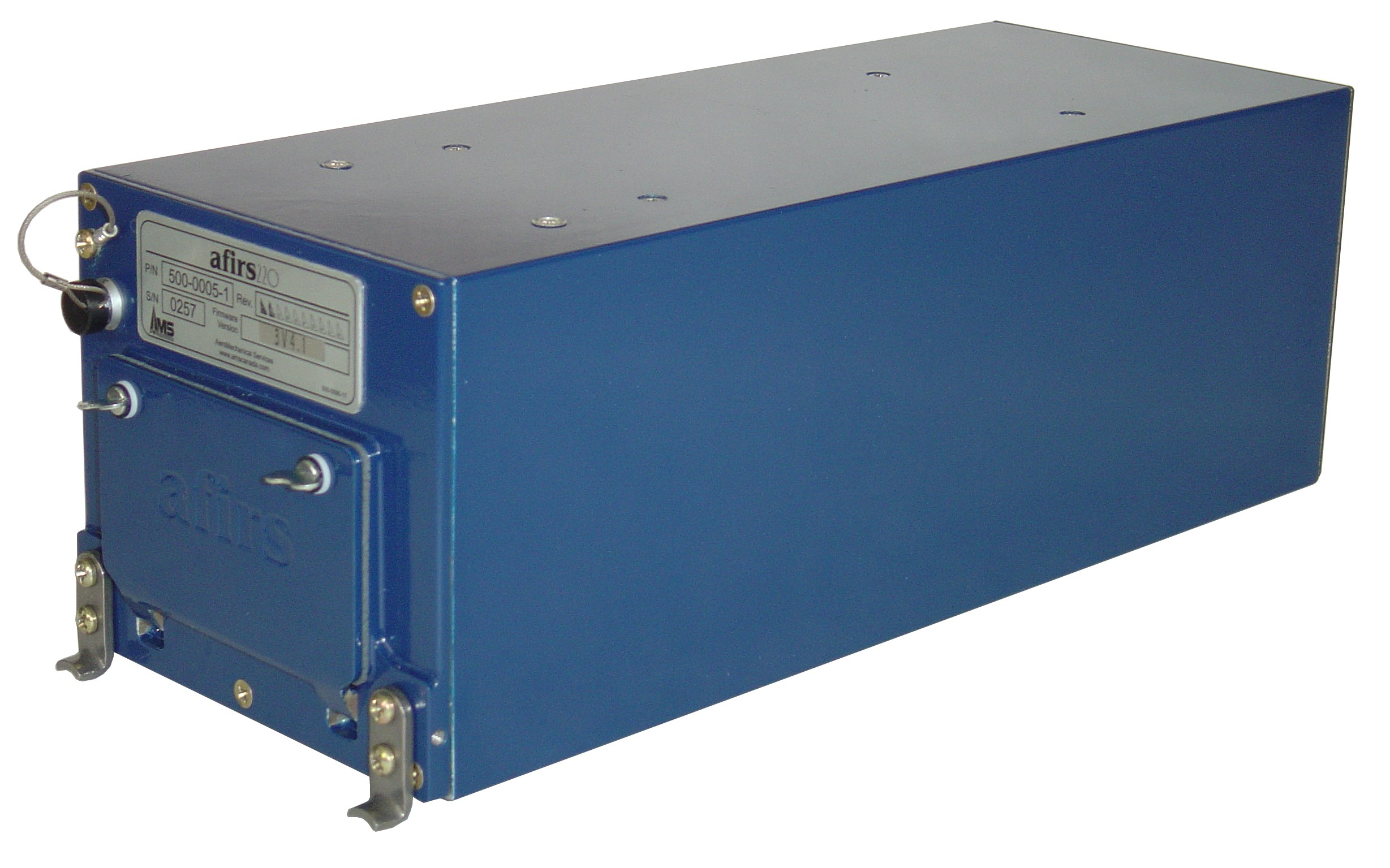
AeroMechanical’s technology is called the afirs(TM) UpTime(TM) system. The technology is nicknamed the ‘bluebox’ because the box that houses its technology is blue and because it reads the same data that is recorded in an aircraft’s blackbox. But the bluebox also records a lot more critical data than a blackbox. In fact, the bluebox can monitor up to 2,000 onboard sensors and send any operational anomaly back to the airline the instant that irregularity occurs.
If a problem develops in flight, an AeroMechanical customer could assemble experts to help the pilot through the issue in a telephone conference call – just like NASA does with its astronauts.
Airlines could also have a replacement part waiting at the aircraft’s next stop in order to minimize repair delays and maximize safety.
The third advantage airlines gain is they can dramatically improve scheduling because they know precisely where each of its aircraft is – on a minute-by-minute basis – whether the plane is in the air or on the ground.
Another advantage comes when an aircraft is forced to make an emergency landing in an area where radar or cockpit radios don’t work. In addition, if the aircraft’s emergency locator transmitter isn’t working, or the transmission can’t be detected, the downed aircraft is essentially lost. That frequently happens and when it does rescue personnel must pinpoint the last radar contact with the troubled plane and use the aircraft’s flight plan to estimate where the downed craft might be. But that is not an easy task if the landing took place in a 2,000 sq. km area. However, if that troubled aircraft was equipped with a bluebox, rescue personnel would know precisely where it landed.
One of AeroMechanical’s first customers was Skyservice Airlines Inc., which is based just outside Toronto in Etobicoke, Canada. Skyservice President & CEO Robert Giguere was interviewed on BNN Television along with AeroMechanical Chairman & CEO Bill Tempany about the advantages of using AeroMechanical’s technology.
History
AeroMechanical was founded in 1998 and began publicly trading on the TSX Venture Exchange under the symbol ‘AMA’ in March 2003. By mid 2008, the Calgary-based company had contracts to install its bluebox on 746 aircraft that were owned by 32 different carriers from around the world.
Notable in its history, AMA’s technology helped two Indian Air Force fighter pilots set a new record in 2007 by breaking the time taken to fly around the world in a micro light aircraft, a plane that weighed less than 500 kilograms with fuel and pilots on board. This flight was documented on the discovery channel on the Daily Planet program. 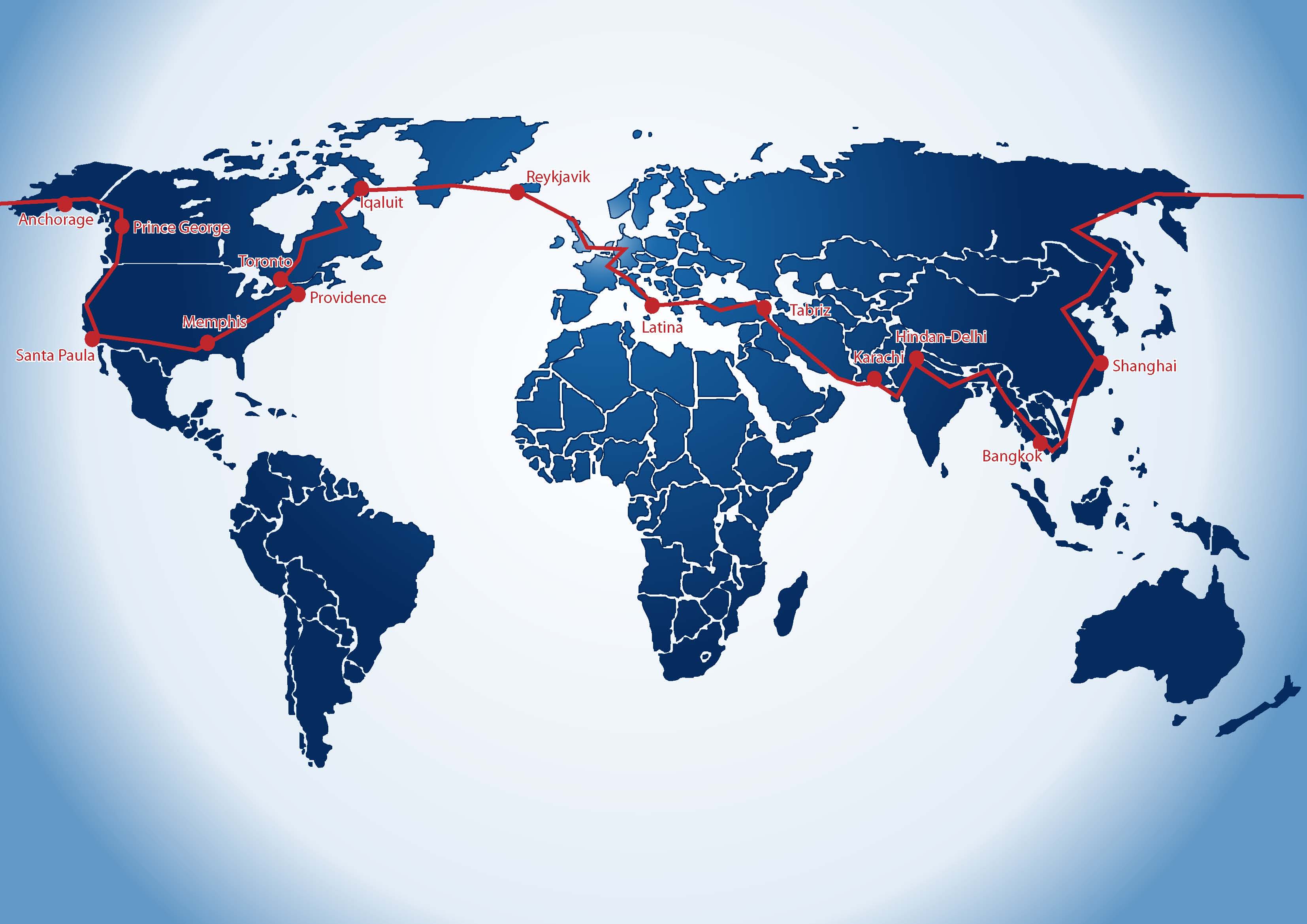 Because of the bluebox, officials, family and thousands of fans were able to watch the tiny aircraft in real time on the Internet as it battled its way through storms, picked its way through mountain ranges or flew over frigid, ice-choked waters. The bluebox helped pilots shave days off the schedule, primarily by allowing them to phone anyone they wanted from wherever they were in order to fly around storms they encountered. They could also minimize time on the ground by phoning ahead to have fuel or other needs ready at their next landing.
External links