
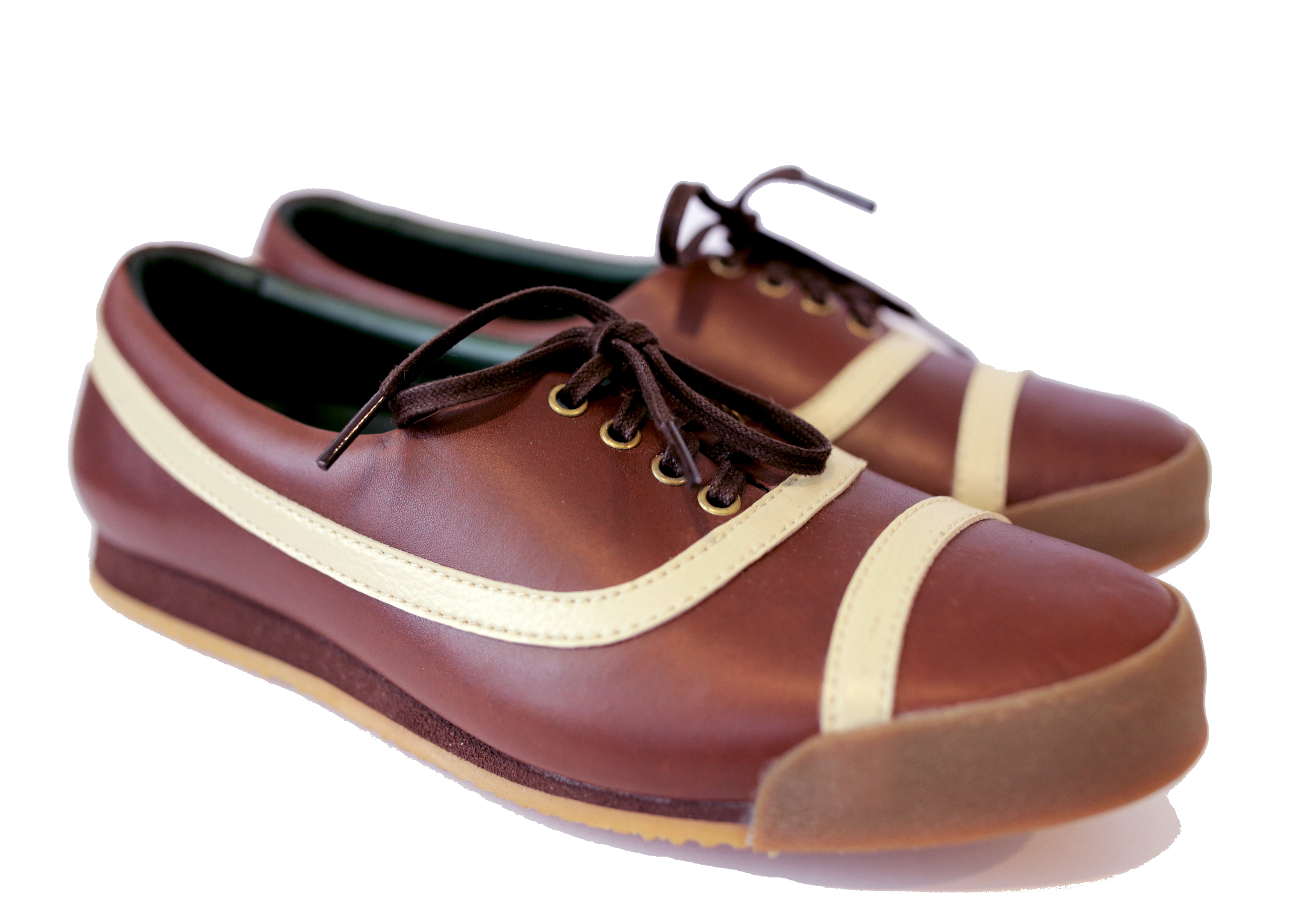
 The Street Slip is a style of laced footwear characterized by its larger than usual opening. Street Slips aesthetically, are built to take the form of Oxfords, Brogues, Derbies and recently, Sneakers.
Street Slips originate from Melbourne, Australia. The idea was launched in October 2013 as part of HeavyTaste. The Street Slip is currently only available in Australia. On 7th February 2014, a crowd-funding campaign was launched on Kickstarter to raise funds for the product to be made globally available.
The term Street Slip, comes from the habit of naming shoes after Australian streets. A 2014 collection Derby designed Street Slip was named after Collins Street in Melbourne. The collection to date comprises 9 designs.
Workflow in health care is an important term for today's physicians. The workflow describes the full process of how the office and patient work with each other. From the moment the patient calls to set up an exam, to the billing staff working on the claims, this is all inclusive in a true workflow. Office administrators are tasked with improving the workflow and making it more economical and time efficient. Workflow in recent years has started to conjure an additional meaning - how an Electronic Medical Record (EMR) operates.
Workflow management technology is not used in health care as often as in other domains. However workflow engines can be very useful to manage processes. Workflow software can be also used as a clinical guideline execution engine.
Workflow management technology is not used in health care as often as in other domains. However workflow engines can be very useful to manage processes. Workflow software can be also used as a clinical guideline execution engine.
HealthFlow is a name of a framework in clinical informatics focusing on healthcare workflow (using workflow technology in healthcare). The framework can represent retrospective search logic (component called RetroGuide) as well as prospective decision support logic (component called FlowGuide).
HealthFlow has been tested at Marshfield Clinic (Marshfield Clinic Biomedical Informatics Research Center) during 2008-2010. It has been included in decision support tools surveyed for creating a virtual medical record representation project within Health Level 7 (HL7).
HealthFlow uses a XPDL workflow modelling language to represent process logic, a workflow editor to author content, and a workflow engine for execution. It can be used for data analysis and also as a clinical decision support system.
HealthFlow has been tested at Marshfield Clinic (Marshfield Clinic Biomedical Informatics Research Center) during 2008-2010. It has been included in decision support tools surveyed for creating a virtual medical record representation project within Health Level 7 (HL7).
HealthFlow uses a XPDL workflow modelling language to represent process logic, a workflow editor to author content, and a workflow engine for execution. It can be used for data analysis and also as a clinical decision support system.
RetroGuide is a name of a research project in medical informatics (or more precisely clinical informatics) focusing on using workflow technology in healthcare. In 2009, RetroGuide became a component in a larger project/system called HealthFlow
This is an ongoing project. Several past phases could be described. Initial phase was at Intermountain Health Care in Utah, USA and happened during 2004-2007. The main mode was retrospective use. The development continues at Marshfield Clinic (Marshfield Clinic Biomedical Informatics Research Center) during 2008-2010. The prospective version of the RetroGuide system has been developed (called FlowGuide) and the overal system which is using a workflow engine within an EHR system is called HealthFlow.
RetroGuide uses a flowchart paradigm to represent knowledge. Knowledge represented can be a prospective alert logic or retrospective EHR query question.
RetroGuide has been used on several clinical problems
* investigating blood pressure control in diabetics patients
* investigating pregnancy rate in female patients after treatment of Hodgkin lymphoma
* investigating HEDIS quality improvement measures from NCQA
** osteoporosis measure (OMW)
** cholesterol control in cardiovascular patients (CMC)
* investigating alternative glucose protocol logic for blood glucose control in ICU patients
* course of care for diabetes
* course of care for AMI
* course of care for chronic kidney disease
* detecting adverse drug events (respiratory failure after use of narcotics, Naloxone)
Evaluation
RetroGuide graphical approach to model queries has been formally evaluated in a study involving 18 human subjects with limited database expertise. The study compared RetroGuide technology with SQL. Each subject had to solve 14 analytical tasks using both compared technologies. The qualitative comparison of average test scores showed that the study subjects achieved significantly higher scores using the RG technology.
Each subject also filled a follow-up questionnaire which compared both technologies qualitatively. The results of this qualitative study showed that 94% of subjects preferred RG to SQL because RetroGuide was easier to learn, it better supported temporal tasks, and it seemed to be a more logical modeling paradigm. The second part of the follow-up qualitative questionnaire also asked RG-specific questions based on validated constructs from the Unified Theory of Acceptance and Use of Technology. The results of this second part suggested that a fully developed, RetroGuide-like technology would be well accepted by users.
This is an ongoing project. Several past phases could be described. Initial phase was at Intermountain Health Care in Utah, USA and happened during 2004-2007. The main mode was retrospective use. The development continues at Marshfield Clinic (Marshfield Clinic Biomedical Informatics Research Center) during 2008-2010. The prospective version of the RetroGuide system has been developed (called FlowGuide) and the overal system which is using a workflow engine within an EHR system is called HealthFlow.
RetroGuide uses a flowchart paradigm to represent knowledge. Knowledge represented can be a prospective alert logic or retrospective EHR query question.
RetroGuide has been used on several clinical problems
* investigating blood pressure control in diabetics patients
* investigating pregnancy rate in female patients after treatment of Hodgkin lymphoma
* investigating HEDIS quality improvement measures from NCQA
** osteoporosis measure (OMW)
** cholesterol control in cardiovascular patients (CMC)
* investigating alternative glucose protocol logic for blood glucose control in ICU patients
* course of care for diabetes
* course of care for AMI
* course of care for chronic kidney disease
* detecting adverse drug events (respiratory failure after use of narcotics, Naloxone)
Evaluation
RetroGuide graphical approach to model queries has been formally evaluated in a study involving 18 human subjects with limited database expertise. The study compared RetroGuide technology with SQL. Each subject had to solve 14 analytical tasks using both compared technologies. The qualitative comparison of average test scores showed that the study subjects achieved significantly higher scores using the RG technology.
Each subject also filled a follow-up questionnaire which compared both technologies qualitatively. The results of this qualitative study showed that 94% of subjects preferred RG to SQL because RetroGuide was easier to learn, it better supported temporal tasks, and it seemed to be a more logical modeling paradigm. The second part of the follow-up qualitative questionnaire also asked RG-specific questions based on validated constructs from the Unified Theory of Acceptance and Use of Technology. The results of this second part suggested that a fully developed, RetroGuide-like technology would be well accepted by users.