
Flooding in Angola is caused by heavy rainfall, which is increased by climate change and the country's geographical layout, including its major river systems. Angola experiences a rainy season from October to May, during which the Inter-tropical Convergence Zone contributes to intense precipitation, particularly in the northeastern regions. Major rivers such as the Cuanza, Zambezi, and Cunene contribute to flooding.
The Cuvelai River system, part of the Cunene River basin, inundates areas in Southern Angola, affecting provinces such as Cunene and Cuando Cubango. Floods from the Cuanza River have historically affected surrounding urban provinces, including Luanda. According to the World Bank, the economic impact of floods in Angola can reach up to $75 million annually.
Between 2005 and 2017, floods affected over 86 percent of the population, resulting in the displacement of over 480,000 people. In April 2023, heavy rainfall caused flooding that resulted in at least 20 fatalities and displaced thousands of people across several provinces.
Peru has faced severe flooding, often associated with the El Niño phenomenon, resulting in substantial economic losses. For instance, the 2017 El Niño-caused floods caused damages exceeding $3.1 billion, equivalent to approximately 1.6% of the nation's Gross Domestic Product (GDP). These floods resulted in at least 162 fatalities and severely impacted infrastructure, including the destruction of over 150,000 homes, 500 kilometers of roadways, and more than 500 bridges. Forecasts suggest that by 2030, the country could experience a 26% increase in annual economic losses due to flooding, relative to the year 2000, potentially rising to 174% by 2100.
The Peruvian government has implemented proactive measures to mitigate the harmful effects of such natural disasters. In December 2023, President Dina Boluarte announced the allocation of S/4.5 billion (approximately $1.2 billion) for prevention and risk reduction strategies, to reduce the effects of potential El Niño events. This plan includes developing storm drainage systems to prevent urban flooding, implementing dengue control measures, and acquiring machinery essential for disaster response. Additionally, S/795 million (about $212.4 million) has been designated for humanitarian aid, with S/161 million (approximately $43 million) allocated for the procurement of necessary equipment.
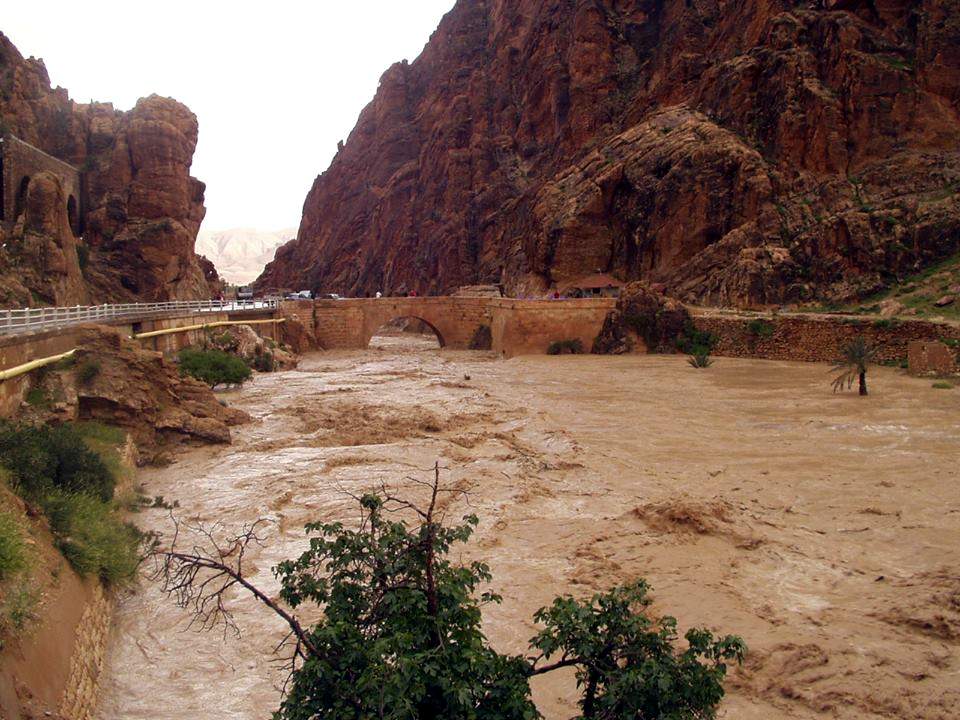 Floods in Algeria are caused by heavy rainfall, particularly during the autumn and winter months, with an average of 174 flood events occurring annually. Flash floods account for approximately 62.20% of these events, involving major rivers such as the El Harrach, Chélif, and M'zab. A significant flood event occurred in Bab El Oued in November 2001, resulting in 900 fatalities and substantial economic losses. Between 2000 and 2011, Algeria reported 1,014 deaths due to flooding, Urbanization and storm drainage systems have been identified as factors related to flood risk.
According to recent studies, floods cause average annual economic losses equivalent to around 0.7% of Algeria's GDP, primarily due to the increasing frequency of extreme weather events. The Algerian government provides approximately 255 million USD annually for disaster response and mitigation efforts related to flooding.
Icelandic floods are primarily caused by glacial dynamics and volcanic activities. It comprises various phenomena, including jökulhlaups, river floods, and coastal flooding. Jökulhlaups are the most significant type of flood in Iceland. They occur when water is rapidly released from beneath glaciers, often triggered by volcanic activity or geothermal heating. The 2015 Vatnajökull event is an example of this type of flood, which produced peak discharges of 900,000 cubic meters per second. Iceland has experienced approximately 60 major floods since the 9th century.