
Benin–Nigeria relations are the bilateral diplomatic relations between Benin and Nigeria. The length of the international border between the two countries is 809 km.
History
Benin has maintained good relations with the regional power Nigeria. Currently, there are no officially established boundaries in the area where the territories of Benin, Niger, and Nigeria meet.
Trade
Informal trade continues to dominate the economic relationship between the two countries: transit trade and re-exports to Nigeria account for 20% of Benin's GDP, and approximately 80% of Benin's imports are destined for Nigeria. Factors such as Benin's unstable export base, heavy dependence on Nigeria, electricity supply issues, and inefficient government administration are among the challenges that hinder the country's economic development.
See also
- Foreign relations of Benin
- Foreign relations of Nigeria
- Benin–Nigeria border
References
Nigeria Category:Bilateral relations of Nigeria
Spain–Togo relations are the bilateral relations between Spain and Togo. Togo does not have an embassy in Madrid, but its embassy in Paris is accredited to Spain, and it maintains a consulate in Barcelona. Spain also does not have an embassy in Togo; its embassy in Accra, Ghana, is accredited to Togo, and it maintains a consulate in Lomé.
Diplomatic relations
Bilateral relations between Spain and Togo are considered cordial and friendly, with no significant disputes, although interactions have generally been limited to occasional visits by officials from both countries.
Relations were revitalized with the official visit to Lomé by former Spanish Prime Minister José Luis Rodríguez Zapatero in June 2009, accompanied by the Minister of Foreign Affairs and Cooperation, the Minister of Justice, and the Director of AECID. During the visit, Memoranda of Understanding on political consultations and development cooperation were signed, providing a foundation for deepening bilateral relations.
In July 2014, Togo's Minister of Foreign Affairs, Robert Dussey, visited Madrid, giving new impetus to bilateral relations, including in the commercial sector, where opportunities exist for Spanish companies, particularly in infrastructure and housing construction.
In addition to supporting ongoing democratic reforms and promoting the presence of Spanish companies, other areas for potential development in bilateral relations include human rights dialogue, development cooperation, and collaboration on migration and maritime security.
Economic relations
Economic and commercial relations between Spain and Togo strengthened significantly during the 2010s. Spanish exports to Togo doubled in 2011 and 2012.
Although Spanish exports to the West African country remain modest, they increased at a rapid pace. Between 2010 and 2011, exports rose from €17 million to €70 million, and this figure doubled again in 2012 to €155 million. In 2013, Spanish exports continued to grow, reaching a record €213 million. The most recent available figure from 2015 shows a decline in exports to €123 million. Togo ranks 96th among Spain's trading partners.
See also
- Foreign relations of Spain
- Foreign relations of Togo
References
Togo Category:Bilateral relations of Togo
Spain–Suriname relations are the bilateral relations between the two countries. Suriname's embassy in Brussels is accredited to Spain. Spain's embassy in Port of Spain, Trinidad and Tobago, is accredited to Suriname, and Spain also maintains an honorary consulate in Paramaribo.
Colonial period
Christopher Columbus sighted the area in 1498, but it was not until 1593 that Spanish explorers returned to the region, already known as Suriname, as it was inhabited by the Surinen, a Taíno group. During the first half of the 17th century, there were unsuccessful attempts by the Spanish, British, French, and Dutch to settle in the area, largely due to resistance from the indigenous population. This resistance was broken in 1651, when the British Francis Willoughby established an outpost in what is now Paramaribo.
Diplomatic relations
Spain has maintained diplomatic relations with Suriname since 1976. The resident embassy in Port of Spain, Trinidad and Tobago, is accredited to the Surinamese authorities. Ambassador José María Fernández López de Turiso presented copies of his credentials to the Ministry of Foreign Affairs in April 2014 and formally presented his letters of credence to the president in November 2014.
See also
- Foreign relations of Spain
- Foreign relations of Suriname
References
Suriname Category:Bilateral relations of Suriname
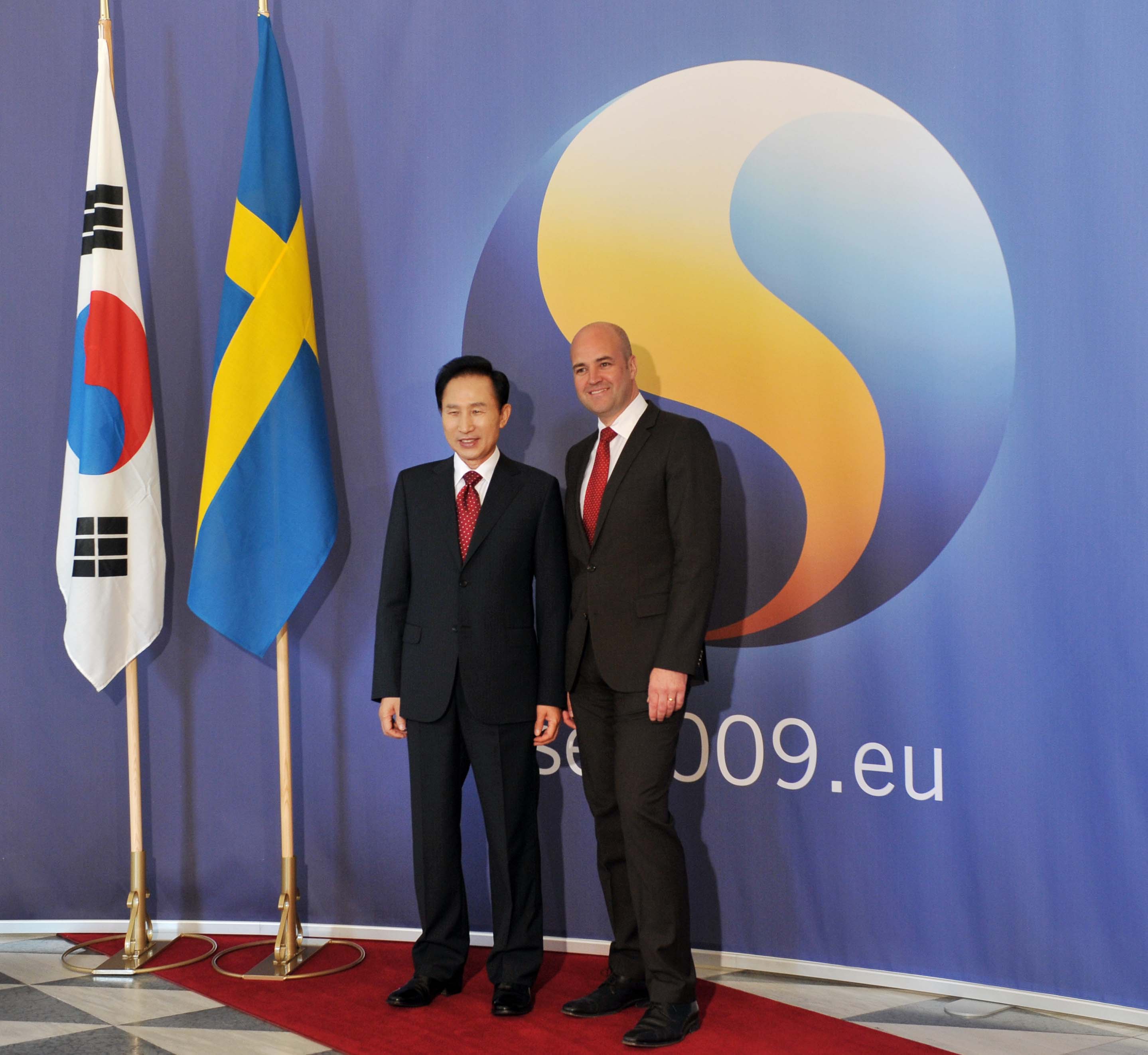 South Korea–Sweden relations refer to the diplomatic, political, economic, and cultural relations between South Korea and Sweden. Since the establishment of diplomatic relations in 1959, the two countries have maintained and developed a traditional friendship across various fields.
South Korea and Sweden officially established diplomatic relations in 1959. Since then, they have continued to cooperate in areas such as politics, economy, science and technology, and culture. Sweden maintains an embassy in Seoul, while South Korea operates an embassy in Stockholm. Sweden has also been involved in Korean Peninsula affairs, supporting the maintenance of the armistice through its role in the Neutral Nations Supervisory Commission (NNSC) following the Korean War.
History
South Korea and Sweden have maintained political and diplomatic cooperation based on a long-standing tradition of friendship. Following the Korean War armistice in 1953, Sweden contributed to the maintenance of the armistice framework as a member of the Neutral Nations Supervisory Commission (NNSC), participating in the commission responsible for supervising and monitoring the armistice agreement.
Sweden's involvement in the NNSC has continued since 1953 and has served as a diplomatic foundation for close cooperation with South Korea.
At the time, the South Korean government promoted green growth and sustainable development as key diplomatic priorities, which aligned with Sweden’s long-standing emphasis on environmental and sustainability policies. The two countries have exchanged views on global agendas, including climate change, environmental technology, and green transition cooperation.
During the Korean War, Sweden also sent a medical support unit to provide humanitarian aid, an event considered an important historical foundation of bilateral relations.
Economic relations
South Korea and Sweden have developed strong economic ties. South Korea is one of Sweden's key trade partners in Asia, and Sweden has likewise expanded its trade and investment relations with South Korea. Major traded goods include electronics, machinery, automotive parts, and telecommunications technology. In 2025, the digital trade agreement between South Korea and the EU was concluded, which also positively impacts Swedish companies. The agreement aims to improve the e-commerce environment through measures such as the introduction of digital signatures.
Economic cooperation and visits
In 2025, a Swedish business delegation visited South Korea, opening a new chapter in bilateral economic relations by signing strategic agreements to strengthen cooperation in sustainability and advanced technology sectors.
References
External links
- Ministry of Foreign Affairs of the Republic of Korea – Embassy of the Republic of Korea in Sweden
- Embassy of Sweden in South Korea
Sweden Category:Bilateral relations of Sweden